

When you look at the digital gambling sector, specifically online slots or “pokies,” it is easy to dismiss it as mere entertainment. But, for the astute investor, this industry represents one of the most mathematically precise revenue generation models in the digital economy. We are not discussing luck here. We are discussing a sector built on high-frequency transactions, algorithmic certainties, and psychological retention strategies that rival the biggest tech companies in the world. As you evaluate opportunities in this space, you must look past the flashing lights and understand the cold, hard mechanics that drive profitability. The market for online pokies has matured from a digital wild west into a sophisticated financial ecosystem where margins are calculated to the decimal point and user acquisition is a science. This article breaks down exactly how these digital assets generate cash flow and where the smart money is currently positioning itself.
Key Takeaways
- Online pokies generate revenue through high-velocity transactions that compound a small statistical house edge into significant profit.
- Successful platforms often use a “Pokies King” branding strategy to appeal to player status and secure high-value VIP retention.
- Mobile optimization and fast fintech integration are critical infrastructure requirements to prevent revenue loss from latency.
- Navigating local regulations in markets like HU (Hungary) offers stability and banking access that offshore grey markets cannot provide.
- Artificial intelligence is evolving the sector by personalizing game volatility to maximize user session length and lifetime value.
The Financial Mechanics Of Digital Slot Machines
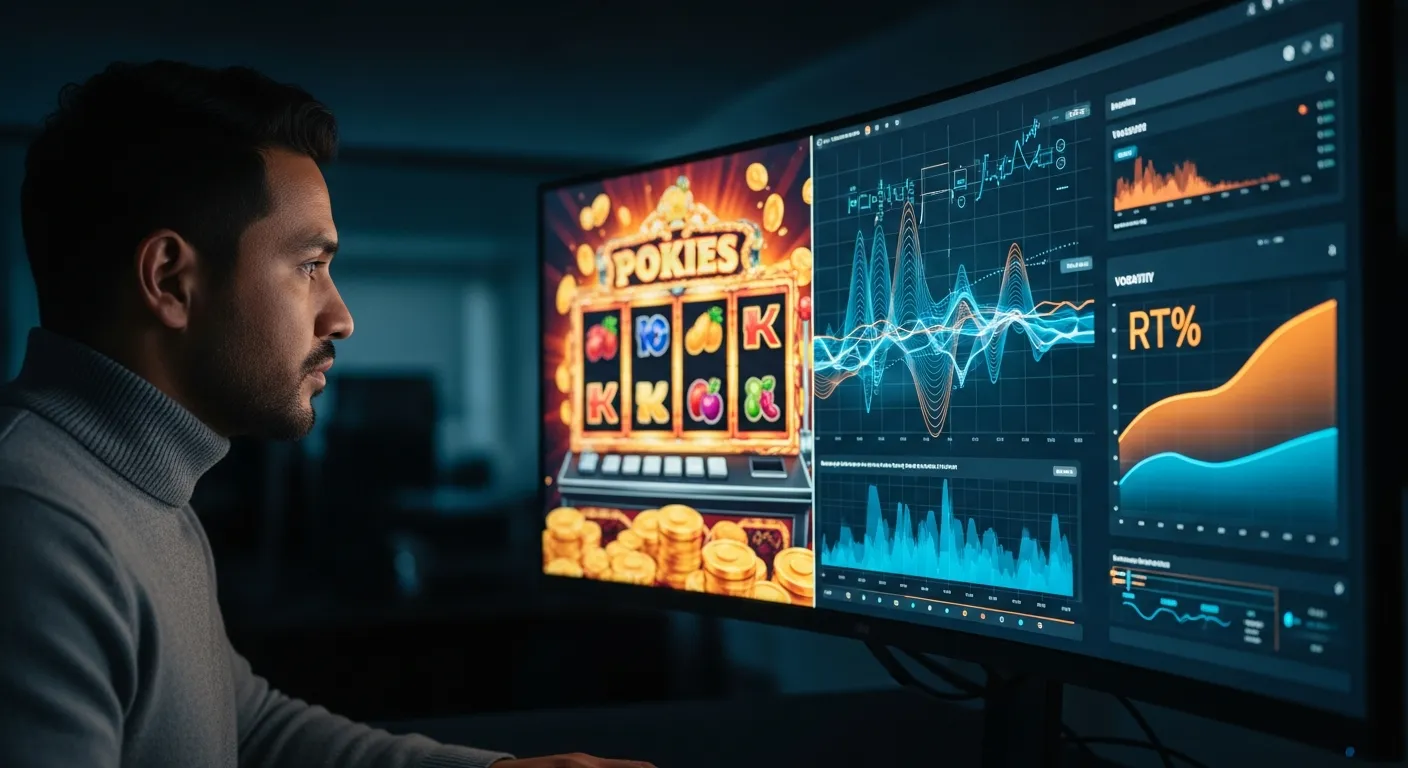
To understand the profitability of an online casino operation, you have to strip away the graphics and sound effects. At its core, a slot machine is a data model designed to extract liquidity over time while maintaining user engagement. The balance sheet of any gaming company relies heavily on two specific metrics: Return to Player (RTP) and Volatility. These are not just gaming terms: they are the fundamental inputs of your revenue modeling.
Return To Player (RTP) And House Edge Dynamics
The Return to Player percentage is essentially the inverse of your gross profit margin. If a machine has an RTP of ninety-six percent, the house edge is four percent. In most industries, a four percent margin might sound thin, but you have to consider the velocity of play. A single user might spin the reels six hundred times an hour. That four percent edge is applied repeatedly, compounding the revenue generation every few seconds. Unlike retail or manufacturing, there is no cost of goods sold for each individual spin. Once the software is developed or licensed, the marginal cost of a transaction is negligible. So, that small statistical edge becomes a reliable revenue stream that behaves more like a high-yield bond than a traditional product sale. You can predict cash flow with remarkable accuracy over a large enough sample size of spins.
Understanding Volatility And Hit Frequency In Revenue Modeling
While RTP dictates how much money the machine keeps over millions of spins, volatility determines how that money is collected and distributed in the short term. This is crucial for managing your cash reserves and understanding player lifetime value. High volatility games pay out less frequently but in larger amounts. These are designed for the high-risk, high-reward demographic, the players who drive significant variances in daily revenue but often boast higher lifetime values. Low volatility games provide a steady trickle of small wins, extending the play session and reducing the risk of the player busting out early. From a portfolio perspective, you need a mix. Low volatility ensures consistent daily active user metrics and predictable cash flow, while high volatility products attract the “whales” or VIPs who can significantly alter your quarterly earnings with a single session.
Market Dominance Strategies: The “King” Branding Approach
In a saturated market, technology alone is not enough. The most successful operators use psychological branding strategies to differentiate themselves. You often see themes of royalty, gold, and dominance, the concept of the “Pokies King.” This is not accidental. It speaks directly to the player’s ego and desire for status. Retaining a high-net-worth player is far more cost-effective than acquiring a hundred low-value ones, and your branding strategy acts as the filter.
Case Study: VIP Hierarchies And High-Value Retention
The Pareto principle is alive and well in online gambling: a small fraction of players contributes the majority of the revenue. Effective operators build elaborate VIP hierarchies to capitalize on this. By designating top-tier players as “Kings” or “Royalty,” operators create a psychological lock-in. I have observed that once a player achieves a high status on a specific platform, their likelihood of defecting to a competitor drops significantly because they do not want to start at the bottom of the ladder elsewhere. This status is maintained through dedicated account managers, faster withdrawal times, and exclusive access to high-limit games. For an investor, the strength of a platform’s VIP program is a leading indicator of its long-term sustainability.
The Economics Of Bonuses And Free Spin Incentives
You might look at welcome bonuses and free spins as generous marketing expenses, but they are carefully calculated customer acquisition costs. A “100% match bonus” is not free money: it is a tool to increase the volume of play. These incentives almost always come with wagering requirements, often necessitating that the player bets the bonus amount thirty or forty times before withdrawing. Mathematically, the house edge grinds away at that bonus balance during the wagering process. By the time the requirements are met, the statistical probability suggests the bonus funds will have largely returned to the house. It is a loss-leader strategy that funds the initial data collection on a new player, allowing the operator to categorize them based on their betting behavior.
Operational Infrastructure And Technology
The backend infrastructure of an online gambling operation is where the battle for market share is often won or lost. If a game lags or a deposit fails, the customer is gone instantly. In this high-speed environment, technical debt is a direct threat to revenue. You need to view the platform not just as a website, but as a high-frequency trading desk where uptime and speed are paramount.
Mobile Optimization And Cross-Platform Accessibility
The shift to mobile is absolute. Data consistently shows that over seventy percent of revenue in the sector now comes from mobile devices. But, simply shrinking a desktop site to a phone screen is insufficient. The user interface must be native-feeling and responsive. I have analyzed platforms that failed simply because their load times on 4G networks were two seconds slower than the competition. Every second of latency creates friction, and friction stops the flow of money. The top-performing operators invest heavily in lightweight code and edge computing to ensure that a spin result is delivered instantly, regardless of the user’s location or device.
Fintech Integration: Crypto And Traditional Banking Options
Payment processing is the lifeblood of the operation. If you cannot take money in or send it out efficiently, the business model collapses. We are seeing a massive integration of fintech solutions to solve the “speed to wallet” problem. Traditional banking rails are often slow and subject to scrutiny, leading to declined transactions. This is why crypto integration has become a standard feature rather than a niche offering. Cryptocurrencies eliminate chargeback fraud, a major line item in casino loss prevention, and allow for near-instant settlements. For the operator, this reduces the capital held in transit and improves liquidity. Offering a diverse mix of local payment gateways (like specific banking options in Hungary or e-wallets in Asia) alongside global crypto options is now a baseline requirement for operational success.
Regulatory Compliance And Future Outlook
The greatest risk to your investment in this sector is not a lack of players, but a change in regulation. The legal map for online pokies is a patchwork of grey markets, licensed jurisdictions, and strict prohibitions. Navigating this successfully requires a legal team as competent as your marketing team. The days of operating comfortably from a single offshore island with no oversight are fading fast.
Navigating Licensing Across Global Jurisdictions
Obtaining a license in a tier-one jurisdiction like the UK or Malta is expensive and comes with high tax rates, but it offers banking stability and access to lucrative markets. Conversely, operating in grey markets offers higher margins but comes with the constant threat of domain blocks or payment processor bans. You have to weigh the cost of compliance against the stability of the revenue. Recently, we have seen a push towards localized regulation, where countries like Hungary, Germany, and others carry out their own specific licensing regimes. Operators who can quickly adapt to these local frameworks gain a first-mover advantage, establishing brand loyalty before the market becomes crowded.
Emerging Trends In Algorithmic Gaming Investments
Looking ahead, the integration of AI into the gaming experience is the next frontier for capital allocation. We are moving beyond simple random number generators to personalized algorithmic gaming. Imagine a slot machine that adjusts its volatility in real-time based on the player’s frustration level or betting history to maximize the session length. This level of personalization raises ethical questions, but from a purely business standpoint, it represents the next leap in revenue optimization. Investors are currently pouring capital into the tech firms that supply these behavioral analytics tools, betting that data-driven retention will outperform traditional marketing.
Conclusion
Investing in the business of online pokies requires you to look beyond the stigma and see the software company underneath. It is a sector defined by recurring revenue, high margins, and scalability that few other industries can match. But, it is also a sector where the barrier to entry is technical and legal excellence. The successful operators of tomorrow are the ones treating their platforms like financial institutions today, focusing on security, speed, and mathematical precision. If you approach this market with a respect for the data and a clear understanding of the regulatory risks, the potential returns are substantial.
Frequently Asked Questions
Why do many top casino operators use “Pokies King” or royalty branding?
Operators use royalty themes like “Pokies King” to appeal to player psychology, specifically status and ego. This branding strategy helps differentiate platforms in a saturated market and aids in retaining high-net-worth players by creating a sense of exclusivity and prestige within their VIP hierarchies.
What is the difference between RTP and volatility in online slots?
Return to Player (RTP) is the percentage of money a machine pays back over time, representing the inverse of the house edge. Volatility, however, measures risk; high volatility games offer infrequent but larger wins, while low volatility games provide smaller, more consistent payouts to extend play sessions.
Are online casino welcome bonuses and free spins actually free money?
No, bonuses are calculated customer acquisition costs, not free cash. They almost always come with wagering requirements that force players to bet the bonus amount multiple times. Mathematically, the house edge usually reclaims the majority of these funds before the player can withdraw any winnings.
How can I tell if an online pokies site in Hungary is legitimate?
To identify a legitimate operator in markets like Hungary, check for valid licensing information in the site’s footer and ensure they offer localized payment gateways. Trusted platforms also operate under specific regulatory frameworks rather than relying solely on offshore licenses, ensuring better security and banking stability.
Do I need to download an app to play high-quality online pokies?
generally, no. Modern “Pokies King” caliber platforms utilize advanced mobile optimization and edge computing to offer a native-feeling experience directly in your web browser. This technology allows for instant play without downloads, provided the operator has invested in lightweight code to minimize latency on mobile networks.