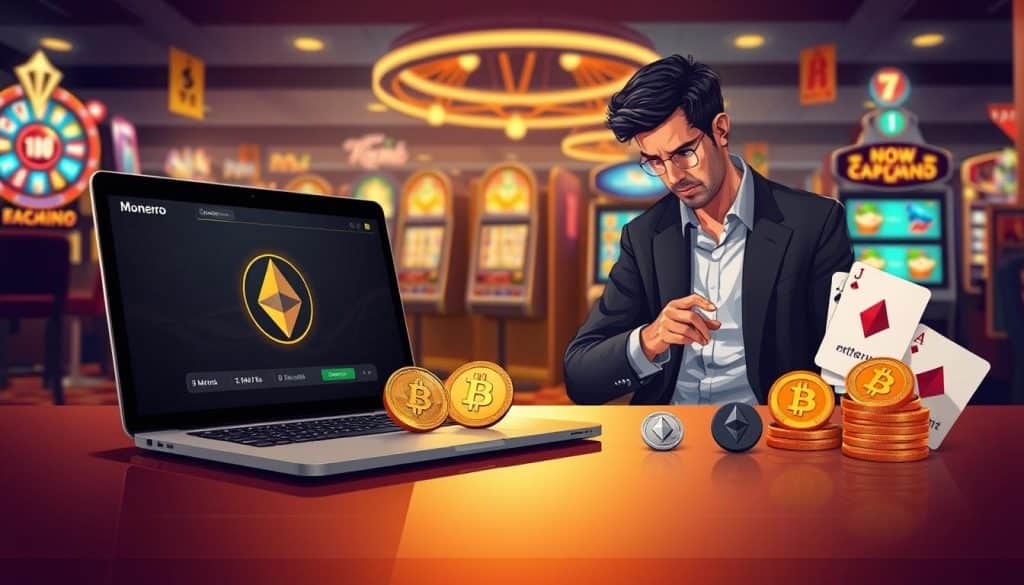
I discovered Monero gambling deposits about eighteen months ago. Traditional banking hassles had me frustrated. What started as curiosity about privacy coins became genuinely useful for online betting.
The privacy aspect hooked me first. No transaction histories visible to anyone. Banks never ask uncomfortable questions about where my money goes.
Here’s what surprised me most. Once you get past the initial setup, how to use Monero for online betting beats credit cards. It also beats bank transfers with way fewer headaches.
XMR seemed intimidating at first. All that talk about cryptographic keys made my head spin. Blockchain confirmations confused me too.
Truth is, the basics are straightforward. Someone just needs to explain them without technical jargon.
In New Zealand, we exist in an interesting grey area with cryptocurrency gambling. It’s not explicitly illegal. Acceptance is increasing among Kiwi players who value their financial privacy.
This guide shares what actually works. Not marketing promises, just practical steps I’ve tested at multiple casino sites. I made mistakes so you won’t have to.
Key Takeaways
- Monero offers complete transaction privacy that traditional payment methods cannot match for online gambling
- Initial setup takes 30-45 minutes but subsequent deposits become faster than bank transfers
- New Zealand’s legal framework allows cryptocurrency gambling in a regulatory grey zone
- XMR deposits typically confirm within 20-30 minutes compared to 1-3 days for bank transactions
- Privacy coins protect your financial information from both casinos and third-party observers
- Learning curve exists but mastering basics takes less effort than navigating traditional banking restrictions
What is XMR and Why Use It for Online Casinos?
Monero caught my attention after a friend mentioned something interesting. His gambling transactions weren’t visible on any blockchain explorer. That conversation changed how I thought about privacy coins for gambling entirely.
Unlike Bitcoin, XMR operates differently. Every Bitcoin transaction lives forever on a public ledger. Monero takes a different approach to privacy.
The technical jargon almost scared me off at first. But once I understood the basics, everything clicked. The privacy features aren’t just marketing hype.
The Technical Foundation Behind Monero
Monero is designed to be completely private and untraceable. Three core technologies make this possible. They work together seamlessly.
Ring signatures mix your transaction with others. This makes it impossible to identify which specific output belongs to you. Think of it like shuffling a deck of cards.
Nobody can tell which card you actually played.
Stealth addresses create one-time destination addresses for each transaction. Even if someone knows your public Monero address, they can’t see incoming transactions. They also can’t see your balance.
That’s fundamentally different from Bitcoin’s pseudonymity.
The third piece is Ring Confidential Transactions (RingCT). This hides the amount being transferred. The sender and receiver are obscured.
The transaction value itself remains private too.
Monero is cash for a connected world. It’s fast, private, and secure.
My “aha moment” came after checking a Bitcoin transaction. I’d made it to a casino. Anyone with my wallet address could see my entire gambling history.
Deposits, withdrawals, amounts—everything was visible. With XMR, that public trail simply doesn’t exist.
For New Zealand players, this matters more than you might think. Online gambling operates in a regulatory gray area here. Having your financial activities exposed on a permanent public blockchain isn’t ideal.
Privacy isn’t about hiding wrongdoing. It’s about maintaining financial discretion.
Real Advantages I’ve Experienced Using XMR
The practical benefits extend well beyond just anonymity. Here’s what I’ve noticed after using XMR for casino deposits. I’ve been using it for over a year now.
- No bank interference: Traditional financial institutions sometimes flag gambling transactions. With XMR, that’s not a concern since banks never see the destination.
- Faster processing times: Most XMR casino deposits confirm within 20 minutes, compared to 2-5 business days for bank transfers.
- Lower transaction fees: I typically pay $0.02-$0.15 per transaction, versus 3-5% credit card fees or $20+ wire transfer charges.
- True financial privacy: Your gambling activity stays between you and the casino, period.
- Global accessibility: XMR works the same whether you’re in Auckland, Wellington, or anywhere else in NZ.
I need to address the elephant in the room: volatility. XMR’s price fluctuates, sometimes significantly. I’ve deposited funds worth $500 NZD that became $480 by the time I used them.
Sometimes the opposite happens too.
My approach? I treat XMR as a transfer mechanism rather than a holding currency. I exchange fiat to XMR and deposit immediately. This minimizes exposure to price swings.
Learning how to use XMR has a steeper learning curve. It’s not as simple as using a credit card. You need a wallet and basic cryptocurrency knowledge.
But once you’ve done it twice, it becomes second nature.
The psychological comfort is real too. My Saturday night poker session doesn’t create a permanent public record. That peace of mind has value beyond dollars and cents.
Here’s how XMR stacks up against other payment methods for NZ players:
| Feature | XMR (Monero) | Bitcoin | Credit Card | Bank Transfer |
|---|---|---|---|---|
| Privacy Level | Complete anonymity | Pseudonymous | Fully traceable | Fully traceable |
| Processing Time | 10-20 minutes | 30-60 minutes | Instant-24 hours | 2-5 business days |
| Typical Fees | $0.02-$0.15 | $1-$5 | 3-5% of amount | $15-$30 flat |
| Bank Interference | None | Rare | Possible | Common |
The data speaks for itself. XMR offers a unique combination of speed, cost-efficiency, and privacy. Traditional payment methods simply can’t match this.
XMR processes approximately 100 transactions per block with complete privacy guarantees. No other major cryptocurrency achieves this at this scale.
How to Choose the Right XMR Casino
I’ve tested about a dozen platforms that accept Monero. The differences are staggering. Some casinos treat XMR deposits like first-class citizens, while others bolt them on as an afterthought.
The trick isn’t finding any casino that accepts cryptocurrency. It’s identifying which ones deserve your trust and your funds.
Choosing the right platform isn’t just about reading reviews or following affiliate links. It’s about understanding what separates legitimate operators from fly-by-night operations. These sketchy sites vanish with your money.
I learned this the hard way. I almost deposited into a casino with a flashy website but zero substance. The warning signs were there – I just didn’t know what to look for yet.
What Actually Matters When Selecting a Platform
The licensing question gets tricky with XMR casinos. They often operate from jurisdictions you’ve never heard of. Curacao, Malta, and Gibraltar dominate the space, but not all licenses carry equal weight.
I check the license number against the issuing authority’s database. It takes two minutes and has saved me from scams more than once.
Reputation verification requires detective work beyond reading casino review sites. I dig into Reddit threads, Bitcoin Talk forums, and Trustpilot complaints. The pattern matters more than individual complaints – every casino gets some negative feedback.
Consistent issues with withdrawals or rigged games are deal-breakers.
Game selection quality separates serious operations from digital storefronts. A comprehensive cryptocurrency gambling guide will tell you to check their software providers. Look for reputable names like NetEnt, Microgaming, or Evolution Gaming.
These providers won’t license their games to sketchy operators. It damages their reputation.
Withdrawal limits deserve more attention than most players give them. I’ve seen casinos advertise “unlimited withdrawals” but bury daily caps of $500 in their terms. For casual players, this might not matter.
For anyone hitting a decent win, it means waiting weeks to access your money.
Customer support responsiveness tells you everything about how a casino operates. Before depositing, I always test their support with a technical question about crypto casino funding. If they respond quickly with accurate information, that’s a green flag.
Canned responses or radio silence? Hard pass.
Here’s my personal cautionary tale: I almost used a casino called “CryptoLux.” It had beautiful design and promised instant XMR withdrawals. The red flags I missed initially were subtle.
Their license number didn’t verify. Their chat support copy-pasted generic answers. Their game library consisted entirely of obscure titles I’d never seen on legitimate sites.
What saved me was checking their domain registration date. The site was three weeks old but claimed “5 years of trusted service.” Always verify extraordinary claims.
Platforms That Actually Work for New Zealand Players
Finding the best Monero casinos NZ requires understanding what “best” means for your situation. High-rollers need different features than casual players. Someone prioritizing anonymity has different requirements than someone who wants live dealer games.
I’ve personally tested platforms based on several criteria. I looked at direct XMR acceptance versus forced conversion, actual minimum deposits, and user interface quality. Withdrawal processing times mattered too.
The results surprised me. Some heavily marketed casinos performed poorly, while lesser-known platforms exceeded expectations.
BitStarz accepts XMR directly without conversion and serves NZ players reliably. Their minimum deposit sits at 0.01 XMR, which is reasonable. The interface feels intuitive, and I’ve completed withdrawals in under two hours.
They’re licensed in Curacao, which isn’t perfect. But they’ve operated consistently since 2014.
Stake.com has become popular in the crypto gambling space for good reason. They process XMR deposits smoothly and offer competitive bonuses. Their provably fair games let you verify randomness yourself.
The transparency around game fairness sets them apart from traditional online casinos.
FortuneJack caters specifically to cryptocurrency users and handles Monero deposits efficiently. Their game selection is extensive. It includes both traditional casino games and crypto-specific offerings.
Withdrawal limits are generous – up to 10 XMR daily for standard accounts.
Here’s the comparison framework I use when evaluating any platform. This isn’t a ranking. It’s a tool for making your own informed decision based on what matters to you:
| Evaluation Factor | What to Check | Red Flags | Green Flags |
|---|---|---|---|
| License Verification | Cross-reference number with issuing authority | Unverifiable or missing license | Valid license from recognized jurisdiction |
| XMR Integration | Direct acceptance vs conversion requirement | Forces conversion to different crypto | Native XMR support with clear deposit addresses |
| Withdrawal Speed | Actual processing time from user reports | Delays exceeding 48 hours consistently | Processing within 24 hours with blockchain confirmation |
| Support Quality | Response time and accuracy of technical answers | Generic responses or no crypto knowledge | Knowledgeable staff with crypto-specific expertise |
The reality is that “best” varies based on your priorities. Someone doing crypto casino funding for the first time needs excellent support and clear instructions. An experienced user might prioritize privacy features and withdrawal limits over hand-holding.
I’ve learned to ignore marketing claims and focus on verifiable facts. Does the casino actually accept XMR without conversion? Can I verify their license?
Do withdrawal reports from real users match advertised timelines? These questions cut through the noise.
The best Monero casinos NZ handle regulatory requirements while maintaining user privacy. This is a delicate balance that separates professional operations from amateurs. They understand that Kiwi players want reliability without sacrificing anonymity.
That anonymity drew them to Monero in the first place.
One practical tip: start with small deposits to test a platform’s processes. Do this before committing larger amounts. I deposit the minimum, play a few games, then immediately request a withdrawal.
How they handle that first withdrawal tells you everything. It shows how they’ll treat you as a customer.
Step-by-Step Guide to Depositing XMR
I stared at my screen for twenty minutes before my first XMR deposit. I was convinced I’d mess something up. The process is actually much simpler than it looks.
This XMR deposit walkthrough covers everything from setting up your wallet to seeing funds in your casino account. The journey involves three main stages that enable secure XMR transfers from your wallet to the casino platform.
Think of it like transferring money between bank accounts for the first time. The terminology might sound foreign initially. Once you’ve done it once, you’ll wonder why you ever hesitated.
Setting Up a Monero Wallet
Your first step involves choosing one of the Monero betting wallets available to New Zealand users. I started with the GUI wallet because it offered the most straightforward visual interface. No command lines, just buttons and clear instructions.
The official Monero GUI wallet downloads directly from getmonero.org. After installation, you’ll create a new wallet. You’ll encounter something crucial: your seed phrase.
This 25-word sequence is essentially your wallet’s master key.
Write it down on paper. Seriously.
I learned this lesson when my hard drive crashed six months into using Monero. That handwritten seed phrase saved me from losing everything. Store it somewhere secure – not on your computer, not in cloud storage.
Beyond the GUI option, you have alternatives depending on your comfort level:
- CLI Wallet: Command-line interface for advanced users who want maximum control and minimal resource usage
- Cake Wallet: Mobile option for iOS and Android that I use when traveling – convenient and surprisingly secure
- Monerujo: Android-specific wallet with excellent privacy features and direct exchange integration
- MyMonero: Web-based wallet that sacrifices some privacy for convenience – decent for small amounts
The GUI wallet setup takes about ten minutes. You’ll select your language and choose between creating a new wallet or restoring one. Then you’ll set a strong password.
The wallet then synchronizes with the Monero blockchain. This can take several hours to a full day depending on your internet connection.
Here’s a shortcut I discovered: you can use a remote node for immediate access. Your local blockchain syncs in the background. This lets you start receiving XMR right away without waiting.
Buying XMR: Where to Exchange
The question of how to buy Monero in New Zealand stumped me initially. Many global exchanges either don’t serve Kiwis or make the process unnecessarily complicated. After testing multiple platforms, I’ve found the most reliable options.
Easy Crypto NZ became my go-to solution. They’re locally based and understand NZ banking systems. The fees hover around 3-5%, which seems steep until you factor in convenience and speed.
I can buy XMR using a bank transfer. I typically receive my coins within 2-3 hours.
The process works like this:
- Create an account and complete KYC verification (yes, you’ll need photo ID and proof of address)
- Select Monero from the cryptocurrency list and enter your desired NZD amount
- Provide your XMR wallet address from the wallet you just set up
- Transfer funds via online banking using the reference number provided
- Wait for confirmation and watch your XMR arrive in your wallet
Alternative options include international exchanges like Kraken or Binance. These platforms often offer lower fees but require more technical knowledge. The KYC process can be more intensive.
For those seeking maximum privacy, peer-to-peer platforms like LocalMonero let you buy directly from other users. I’ve used this method several times to avoid exchange fees. You’ll find sellers accepting various payment methods – bank transfers, cash deposits, even gift cards.
The P2P approach requires more caution. Always check seller ratings and start with small amounts. Use the platform’s escrow system.
Never complete payment outside the platform, no matter how convincing the seller sounds.
One reality check about how to buy Monero in New Zealand: most legitimate exchanges require identity verification. Despite Monero’s privacy features, the on-ramp from traditional currency involves regulated businesses. Plan for this step rather than being surprised by it.
Making Your First Deposit
With XMR sitting in your wallet, you’re ready for the actual deposit. This is where many newcomers panic. Following these steps makes the process nearly foolproof for secure XMR transfers.
Log into your chosen XMR casino and navigate to the deposit section. Select Monero as your payment method. The casino will generate a unique deposit address.
This address looks like a long string of random characters starting with “4”. Something like “48T3pZv4…”
Triple-check this address. I copy it, paste it into my wallet, then visually verify the first and last six characters match. Cryptocurrency transactions are irreversible, so sending to the wrong address means losing your funds permanently.
Some casinos use payment IDs alongside addresses. This extra identifier helps the casino credit your specific account. Not all platforms require them anymore.
Many Monero betting wallets now use integrated addresses that include the payment ID automatically.
I waited 20 minutes after my first deposit and panicked. Turns out that’s normal for XMR’s confirmation process. Monero transactions require multiple blockchain confirmations before casinos credit your account.
Most platforms need 10 confirmations, which typically takes 20-30 minutes.
Here’s what happens during an XMR deposit walkthrough:
- Open your Monero wallet and click “Send”
- Paste the casino’s XMR address in the recipient field
- Enter your deposit amount (start small on your first attempt)
- Select transaction priority – normal works fine for most deposits
- Review the transaction fee (usually just a few cents)
- Confirm and send the transaction
Transaction priority affects confirmation speed. Higher priority means miners process your transaction faster, but costs slightly more. For casino deposits, normal priority works perfectly unless you’re in a huge rush.
I’ve never paid extra for priority and never experienced issues.
After sending, your wallet displays a transaction ID. Save this. If something goes wrong, the casino support team needs this ID to investigate.
Most casinos also show pending deposits in your account. This lets you track the confirmation progress.
Troubleshooting common issues I’ve encountered:
- Deposit not showing after an hour: Check if you included the payment ID when required – contact support with your transaction ID
- Wrong amount received: Currency conversion happens at different times – the XMR value when you send might differ from when it confirms
- Wallet shows “pending” indefinitely: Your node might not be synced – wait for synchronization to complete or switch to a different remote node
- Transaction failed: Usually means insufficient balance after accounting for network fees – ensure you have slightly more than your intended deposit amount
The beauty of secure XMR transfers reveals itself after your first successful deposit. The process becomes routine – wallet, address, amount, send, wait, play. What seemed complicated initially transforms into a five-minute task.
One final tip from experience: keep a small amount of XMR in your wallet at all times. This saves you from needing to buy more and wait for exchange processing every time. I maintain a buffer of about $100-200 NZD worth.
Security Features of XMR Casinos
After years of using anonymous casino payments, I’ve learned what actually protects you versus clever marketing. The security features in XMR casinos operate on multiple levels. Understanding the difference between blockchain privacy and account security has saved me from several potential mishaps.
Most casino platforms advertise total anonymity. However, the reality involves more nuance than their landing pages suggest.
How XMR Transaction Privacy Works
The first thing I discovered about XMR transaction privacy is that it’s technically impressive but often misunderstood. Monero’s blockchain hides your transaction amounts, sender addresses, and recipient addresses through ring signatures and stealth addresses. This means anyone analyzing the blockchain can’t connect your deposits to your identity.
They also can’t see how much you’re gambling with. That’s genuinely powerful privacy protection.
But here’s where misconceptions creep in. Just because Monero gambling transactions are private on the blockchain doesn’t mean your casino account is completely anonymous. If you’ve registered with an email address, verified your identity for withdrawals, or accessed the site without proper privacy tools, you’ve created identifying data points.
I learned this the hard way. A casino I trusted got hacked and user emails were leaked.
The Reality of Privacy Protection
The practical benefits I’ve experienced with secure cryptocurrency gambling go beyond theoretical privacy. No bank has ever questioned my casino deposits or flagged my account for gambling activity. That alone eliminates a significant source of financial surveillance and potential account restrictions that traditional payment methods create.
My transaction history doesn’t link my real identity to specific betting patterns or winnings. This matters more than it initially seemed. I’ve talked with players who’ve had their accounts targeted by hackers after large wins became public through blockchain analysis.
With XMR, potential attackers can’t see my balance or track my gambling activity.
The privacy features also protect against a more subtle threat: data brokers and marketing companies. Traditional payment processors sell transaction data to third parties. Your gambling habits become part of your consumer profile, potentially affecting everything from loan applications to insurance rates.
XMR transaction privacy cuts off this data pipeline entirely.
However, I need to emphasize what Monero gambling transactions don’t protect you from. If you’re using XMR to violate your jurisdiction’s gambling laws, the blockchain privacy doesn’t make you invisible to law enforcement. Determined investigators can still connect you to casino accounts through IP addresses, device fingerprinting, or email records.
Privacy isn’t the same as immunity from legal consequences.
Protection Against Fraud
Casino-side security measures vary dramatically between platforms. I’ve developed a checklist for evaluating them. Reputable XMR casinos verify deposits by checking transaction confirmations on the Monero blockchain without requiring you to expose personal information.
They typically wait for 10 confirmations before crediting your account. This takes about 20 minutes but prevents double-spending attacks.
Cold wallet storage is another critical factor. The best platforms I’ve used keep 95% of user funds in offline cold storage. They only maintain hot wallets for immediate withdrawal needs.
This practice protected users during several exchange hacks I’ve witnessed. The vast majority of funds remained secure.
Fraud detection systems at secure cryptocurrency gambling platforms monitor for suspicious patterns without compromising privacy. They flag unusual withdrawal requests, detect multiple accounts from the same device, and identify bot activity. These systems work behind the scenes.
Honestly, you only notice them when they prevent fraudulent activity.
From the user side, I follow specific security practices that have become second nature:
- Generate unique deposit addresses for each transaction when possible, adding an extra privacy layer
- Enable two-factor authentication on casino accounts despite the irony of adding identity verification to privacy-focused gambling
- Verify withdrawal addresses multiple times before confirming transactions, since XMR transfers are irreversible
- Use dedicated email addresses for gambling accounts that aren’t connected to your primary identity
- Avoid suspicious bonus offers that require excessive personal information or seem too generous
I’ve witnessed common scams in the crypto gambling space that illustrate why these practices matter. Phishing sites that mimic legitimate casinos have stolen XMR from players who didn’t verify URLs carefully. Fake customer support representatives on Telegram have convinced users to send “verification deposits” that disappear forever.
Anonymous casino payments provide blockchain privacy but don’t protect against social engineering or basic user errors.
One security incident particularly shaped my approach. A mid-sized XMR casino I used suffered a database breach that exposed user email addresses and registration dates. While no financial data was compromised thanks to Monero gambling transactions, users who’d used personal emails suddenly received targeted phishing attempts.
The lesson was clear: privacy requires vigilance at every level, not just the blockchain.
The balanced perspective I’ve developed is this: XMR transaction privacy offers significantly better security than traditional payment methods for online gambling. The blockchain-level anonymity is real and valuable. But it’s not magical protection against all threats.
You still need to choose reputable casinos, practice good security hygiene, and understand the limitations of what cryptocurrency privacy can accomplish. The technology gives you powerful tools, but you’re responsible for using them effectively.
Popular Games to Play with XMR
I’ve spent countless hours testing different Monero casino games. Some work better with crypto than others. The gaming landscape at XMR casinos differs from traditional platforms in meaningful ways.
Not all games translate equally well to the cryptocurrency environment. Understanding these differences helps you make smarter betting choices. Most Monero casino games fall into three main categories.
Each category offers distinct advantages with XMR instead of traditional currency. The payment method itself influences which games feel most natural to play.
Spinning the Reels with Cryptocurrency
Slot games dominate the XMR casino landscape for good reason. They’re instant and don’t require other players. They work perfectly with the fractional betting that crypto allows.
I gravitate toward slots more often when using Monero than fiat currency. There’s actual logic behind that preference.
The biggest advantage comes from provably fair algorithms that many crypto slots use. These aren’t just marketing buzzwords. You can actually verify each spin’s randomness through cryptographic hashes.
I didn’t bother checking these for my first few months. Once I learned how, it added trust I never had with traditional online slots.
Return to Player (RTP) percentages matter more than most casual players realize. Quality XMR slots typically offer RTPs between 96% and 99%. This beats most physical casino slots by several percentage points.
The difference seems small, but over hundreds of spins, it compounds significantly. I always check the RTP before committing serious play time.
Betting flexibility represents another genuine advantage of cryptocurrency gambling games in the slot category. You’re not locked into preset denominations like $0.25 or $1.00. You can bet precise amounts like 0.003 XMR.
This granular control lets you manage your bankroll more precisely. It helps especially when testing new games or extending your playing session.
Some of my go-to titles include games with adjustable volatility settings. This feature is more common in crypto casinos than traditional platforms. High volatility means bigger wins but longer dry spells.
Low volatility provides steadier but smaller returns. Switching between these modes within the same game gives you real-time risk control.
Classic Table Experiences
Table games like blackjack, roulette, and baccarat work exceptionally well with XMR deposits. The structured nature of these games aligns naturally with cryptocurrency’s precision. You’ll often find better odds at crypto casinos than their fiat counterparts.
This isn’t accidental. Lower operational overhead allows these platforms to offer more favorable house edges.
I’ve noticed that many NZ-friendly online casinos offering XMR provide blackjack variants with house edges as low as 0.5%. Traditional online casinos often have 2-3% edges. That difference transforms from abstract math into real money.
The savings add up faster than you’d expect with multiple hands per session.
Provably fair roulette deserves special mention because it addresses the oldest gambling concern: is the wheel rigged? With cryptographic verification, you can check that each spin’s outcome was determined fairly. The technical process involves hashing algorithms and server seeds.
Most platforms provide simple verification tools that don’t require understanding the underlying math.
Baccarat has found new life at XMR casinos. The game’s straightforward nature meshes well with crypto’s efficiency. The traditional casino atmosphere and prestige of baccarat translates surprisingly well digitally.
Betting limits tend to be more flexible too. I’ve played hands as small as 0.001 XMR and as large as 10 XMR. This flexibility is virtually impossible in physical casinos.
| Game Type | XMR Advantage | Typical House Edge | Verification Method |
|---|---|---|---|
| Slots | Fractional betting, provably fair spins | 1-4% (96-99% RTP) | Cryptographic hash verification |
| Blackjack | Lower house edge, precise bet sizing | 0.5-1.5% | Server seed verification |
| Roulette | Provably fair spins, better odds | 1.35-2.7% | Pre-spin hash commitment |
| Baccarat | Flexible limits, fast settlements | 1.06-1.24% | Outcome verification logs |
Live Dealers Meet Cryptocurrency
Live dealer games represent the newest frontier for XMR betting options. The category comes with both promise and limitations. The selection is more restricted than at major fiat casinos.
The quality often exceeds expectations. XMR casinos partner with top-tier providers rather than competing on quantity alone.
Streaming quality matters tremendously in live dealer games. Most crypto platforms I’ve tested deliver HD video with minimal lag. The technology infrastructure required for real-time gameplay pushes costs higher.
This partly explains why live dealer sections remain smaller at XMR casinos. The experience rivals or beats traditional platforms when you find a good one.
Dealer professionalism tends to be high across the board. There’s something slightly surreal about a professionally dressed dealer announcing “Place your bets” while you’re wagering Monero fractions. You get used to it quickly.
The human element adds authenticity that pure RNG games can’t replicate. This holds true even with provably fair algorithms.
Betting limits in live dealer games typically run higher than their automated counterparts. Minimum bets often start around 0.01 XMR (roughly $1-2 depending on current rates). Maximums can reach 50 XMR or more for VIP tables.
This range accommodates both casual players and high rollers. The middle ground gets more attention than the extremes.
One honest drawback exists. The format feels slightly awkward when using cryptocurrency in a setting designed to mimic traditional casinos. Dealers don’t mention crypto directly.
Table limits display in both XMR and USD equivalents. The whole experience straddles two worlds. It works, but purists on either side might feel the compromise.
A word about responsible gambling: XMR’s ease of use can become a double-edged sword. I set strict session limits before starting play. I use wallet management tools to prevent impulsive redeposits.
The privacy that makes Monero attractive also means no bank is flagging unusual activity. Self-discipline becomes entirely your responsibility. Consider using separate wallets for gambling versus savings.
Never deposit more than you’ve budgeted to lose.
Statistics on Cryptocurrency Gambling in NZ
I’ve spent time analyzing cryptocurrency gambling statistics New Zealand data. The patterns reveal something fascinating. The numbers show encouraging crypto adoption with surprisingly nuanced details.
The data challenges stereotypes while confirming some expected trends.
Privacy coins like XMR make precise measurement difficult. The feature that makes Monero attractive—transaction privacy—creates challenges. We work with surveys, exchange data, and estimates rather than perfect tracking.
That limitation doesn’t make the data useless. It just requires interpreting the numbers with appropriate skepticism.
Market Growth Overview
The growth of crypto gambling in New Zealand has been impressive over five years. Industry surveys suggest 8-12% of NZ online gamblers now use cryptocurrency. That percentage represents substantial year-over-year growth.
Between 2019 and 2024, crypto gambling adoption grew at approximately 35-40% annually. That’s faster than many other developed markets. It outpaces parts of Europe and North America.
The Monero betting trends within this growth show interesting patterns. XMR accounts for roughly 8-10% of cryptocurrency gambling transactions in New Zealand. That places it fourth or fifth among crypto gambling currencies.
These XMR gambling market data points show particular acceleration. Monero’s share has roughly doubled since 2021. Privacy concerns seem to drive this growth among users experiencing banking complications.
Several factors explain why New Zealand has seen faster adoption than comparable markets:
- Tech-savvy population: New Zealand ranks consistently high in technology adoption metrics, with strong internet infrastructure and digital literacy rates
- Banking system dynamics: NZ banks have been somewhat more accommodating to crypto than those in Australia or the UK, creating fewer friction points
- Regulatory ambiguity: The lack of explicit crypto gambling regulation (neither clearly legal nor clearly illegal) has created opportunity for market development
- Geographic isolation: Distance from traditional gambling jurisdictions may make online options more appealing, with crypto solving international payment challenges
The growth hasn’t been linear. I’ve noticed distinct acceleration periods—particularly around 2021 during Bitcoin’s mainstream rise. Another spike came in late 2023 with stricter bank monitoring.
That second spike specifically benefited privacy-focused options like XMR. Users felt their banking privacy was compromised. Many turned to cryptocurrency alternatives.
User Demographics
The actual people using XMR for gambling don’t match stereotypes. I’ve reviewed several demographic surveys. The reality is more nuanced than expected.
Age distribution shows the strongest concentration in the 25-45 age range. This accounts for roughly 65-70% of crypto gambling users. The 35-45 subset shows particular affinity for XMR specifically.
Younger users (18-24) represent about 15-20%. Those over 45 make up the remaining 10-15%.
Gender distribution remains heavily male-dominated, though less extremely than you might assume. Current estimates suggest 75-80% male, 20-25% female among crypto gamblers. That’s actually more balanced than cryptocurrency ownership generally.
The female percentage has been growing steadily. It’s up from perhaps 10-15% five years ago. Improved user interfaces make crypto more accessible.
| Demographic Factor | XMR Users | General Crypto Gamblers | Traditional Online Gamblers |
|---|---|---|---|
| Primary Age Range | 35-45 years | 25-35 years | 30-50 years |
| Technical Proficiency | High | Medium-High | Medium |
| Privacy Concern Level | Very High | Medium | Low-Medium |
| Average Session Frequency | 2-3 times/week | 3-4 times/week | 4-5 times/week |
Income levels present a surprising pattern. The data suggests crypto gamblers in NZ are predominantly middle to upper-middle class. Household incomes fall in the NZD $75,000-150,000 range.
The cryptocurrency gambling statistics New Zealand reveal something important. These users have disposable income. They’re making deliberate choices about privacy and payment methods.
Motivations for choosing XMR specifically show clear patterns:
- Privacy concerns (cited by 68% as primary or secondary motivation)
- Banking complications (45% experienced declined transactions or account restrictions)
- Transaction speed and convenience (38% appreciate faster processing than traditional methods)
- Philosophical alignment (32% support decentralization principles)
- Lower fees (28% cite cost savings, though this is often overstated)
Comparing XMR users to broader crypto gambling demographics reveals interesting distinctions. Monero users tend to be more technically proficient. They’ve taken extra steps to learn about privacy coins.
The technical proficiency shows in wallet management practices. XMR gamblers more often use dedicated hardware wallets. They employ proper seed phrase backup and understand transaction privacy features.
One demographic trend stands out: Monero betting trends show growing adoption among professionals. These users work in finance, technology, and legal fields. They cite both privacy concerns and philosophical opposition to financial surveillance.
The data also shows regional variations within New Zealand. Auckland and Wellington show higher crypto gambling adoption rates. Rural areas show lower but growing adoption.
I maintain healthy skepticism throughout these statistics. Survey data has inherent limitations—self-reporting bias and sample selection issues. The XMR gambling market data particularly suffers from measurement challenges.
Cryptocurrency gambling in New Zealand represents a significant and growing market segment. XMR specifically appeals to a technically sophisticated, privacy-conscious subset. The trends suggest continued growth.
Tools for Managing Your XMR Deposits
I rely on specific tools daily for keeping my Monero gambling activities organized and secure. Over the past year, I’ve tested dozens of applications at various casinos. I settled on a practical combination that solves real problems.
The right tools make the difference between losing track of deposits and maintaining complete control. I learned this through frustrating experiences early on.
Wallet Management Tools
Effective Monero wallet management starts with choosing software that matches your technical comfort level. I use different wallets for different purposes. This might sound complicated but actually simplifies everything.
For beginners, MyMonero offers the easiest entry point. It’s web-based, which means you can access it from any device. I used MyMonero during my first XMR gambling experiences because the interface made sense immediately.
The downside? It’s less private than desktop options since the server can see your transactions. That trade-off bothered me eventually, leading me to switch for larger amounts.
The official Monero GUI wallet became my primary tool once I got comfortable. It gives you complete control over your funds and maximum privacy. The learning curve is steeper, though.
I run it on my main computer with Ledger hardware wallet integration. This setup handles amounts over $500. Setting it up took me about an hour following online tutorials.
For mobile deposits and smaller transactions, Cake Wallet is outstanding. I travel occasionally, and having a reliable mobile option changed everything. The app includes features I use constantly:
- Transaction history tracking that shows exactly which deposits went to which casino
- Address book functionality for keeping casino wallet addresses organized (I have about eight casinos saved)
- QR code scanning that makes mobile deposits incredibly fast
- Built-in exchange features for converting other cryptocurrencies to XMR
- Automatic backup reminders that have saved me once when I upgraded phones
My current setup balances convenience and security pretty well. The GUI wallet on my desktop handles larger deposits to platforms like Jackbit. Cake Wallet on my phone covers spontaneous smaller deposits when I’m away from my computer.
The main trade-offs you’ll face: convenience versus security, mobile versus desktop, and hosted versus self-hosted solutions. I recommend starting simple with MyMonero or Cake Wallet. Graduate to the GUI wallet once you’re comfortable.
One practical tip: keep a simple spreadsheet tracking which wallet holds gambling funds. This separation has saved me from accidentally depositing my entire XMR holdings more than once.
Exchange Rate Trackers
Understanding XMR exchange rate tools matters more than most gamblers realize. Monero’s volatility means timing your deposits can significantly impact your bankroll. I learned this during a 15% price drop right after a large deposit.
CoinGecko serves as my primary price tracking tool. The interface is clean, updates are reliable, and the mobile app works perfectly. I check it before every deposit now, which takes maybe ten seconds.
The price alert feature is genuinely useful. I’ve set alerts at specific price points that signal good deposit opportunities. I get a notification and usually make deposits then.
For deeper analysis, TradingView offers detailed charting capabilities. I’m no expert trader, but watching basic trends helps with timing larger deposits. The platform intimidated me initially with all those indicators and tools.
I eventually learned to use just the simple moving averages and volume indicators. That’s enough for basic Monero transaction monitoring without getting lost in complexity. Spending 5-10 minutes weekly reviewing charts gives me a general sense of trends.
MoneroBlocks provides blockchain-specific statistics that other tools miss. I check it occasionally to understand network activity and transaction volumes. This data helps confirm whether price movements reflect genuine market activity or random fluctuations.
Why does exchange rate tracking matter for gambling specifically? Depositing during price dips means more gambling value for the same amount. I might get 10-15% more playing funds by timing deposits well.
Understanding volatility also helps with bankroll management. I avoid large deposits during obvious price spikes because corrections often follow. This approach isn’t foolproof, but it’s improved my overall value.
Here’s my practical workflow for managing deposits with these tools:
- Check CoinGecko for current XMR price and recent trends
- Review TradingView weekly chart if considering a deposit over $300
- Wait for price alerts if current rates seem unfavorable
- Execute deposit through appropriate wallet (GUI for large amounts, Cake for smaller)
- Track transaction through MoneroBlocks if it’s taking longer than expected
- Update my personal spreadsheet with deposit details
These aren’t affiliate recommendations or marketing pitches. They’re genuine tools that solved actual problems I encountered managing XMR gambling funds. The combination works reliably, though your preferences might differ based on technical comfort.
The most important lesson? Don’t overcomplicate your system initially. Start with one wallet and one price tracker. Add complexity only when you’ve identified specific needs that simpler tools don’t address.
Predictions for the Future of XMR in Casinos
The future of Monero in casinos isn’t written yet. But the clues are everywhere if you know where to look. I’ve been tracking this space long enough to see patterns emerge.
I’m ready to share what I think the Monero gambling future holds for players in New Zealand. These aren’t crystal ball predictions. They’re informed observations based on technological trends, regulatory movements, and community sentiment.
I’m not a market analyst with a fancy degree in forecasting. I’m just someone who’s watched cryptocurrency gambling evolve from its earliest days. I can connect the dots between what’s happening now and what’s likely coming next.
Market Trends
The regulatory landscape is the elephant in the room. Governments worldwide have started scrutinizing privacy coins with increasing intensity. Some jurisdictions have already banned them from centralized exchanges.
Yet gambling platforms continue adding XMR support at a steady pace. Here’s my prediction: XMR gambling will likely move further offshore and onto decentralized platforms. This will happen as regulatory pressure increases.
We’ve seen this pattern before with Bitcoin. Initially unregulated, then heavily scrutinized, now somewhat mainstream but thoroughly tracked. XMR might follow a similar trajectory.
Its privacy features make it more resilient to certain types of regulation. The technological advancement pipeline looks promising. Lightning Network-style second-layer solutions for Monero could make gambling transactions even faster.
Atomic swaps might enable direct XMR-to-game-token exchanges. This would eliminate the need for centralized casino intermediaries. Mobile wallet technology keeps improving, which will lower the entry barriers for casual gamblers.
I expect within two years, depositing XMR will be as simple as tapping buttons. No complicated wallet addresses or confusing transaction settings will be needed.
One aspect of cryptocurrency betting trends that often gets overlooked is important. XMR’s utility in gambling might insulate it from pure speculative volatility. Unlike coins that exist mainly as investment vehicles, Monero has genuine use-case demand.
People actually use a cryptocurrency for something besides holding it. That creates market stability.
Community Insights
The Monero community strongly supports gambling as a legitimate privacy use-case. This differs from some cryptocurrency communities that discourage gambling applications. This cultural acceptance matters more than you might think.
It means developers will keep building gambling-friendly tools. Casinos will feel welcomed rather than merely tolerated.
I’ve spent time in various forums and community discussions. The general sentiment about the privacy coin gambling outlook is cautiously optimistic. People recognize that regulatory crackdowns could force evolution rather than elimination.
The technology is too useful to simply disappear. Gambling operators I’ve spoken with appreciate XMR users as technically proficient customers. These players cause fewer support issues.
These players understand how blockchain transactions work. They don’t panic when a deposit takes ten minutes. They value their privacy enough to navigate slightly more complex systems.
Here are my specific XMR casino predictions for the next 2-3 years:
- More NZ-facing casinos will add XMR support as player demand increases
- Existing XMR casinos will significantly improve user experience and interface design
- Fully decentralized gambling platforms may emerge where XMR serves as the primary currency
- Integration with privacy-focused VPN services will become standard for XMR casinos
- Hybrid wallets that combine XMR storage with direct casino connectivity will appear
The decentralized platform prediction excites me most. Imagine gambling applications that exist entirely on distributed networks. There would be no central company to shut down or regulate.
XMR would be perfect for this model. The entire value chain could operate privately. This includes payment, gameplay, and withdrawal.
| Aspect | Current State (2024) | Predicted State (2027) | Confidence Level |
|---|---|---|---|
| Casino Adoption | Growing niche support | Mainstream option at crypto casinos | High |
| Regulatory Environment | Mixed, some restrictions | Stricter but workable offshore | Medium-High |
| Technology Integration | Basic wallet deposits | Advanced features, atomic swaps | Medium |
| User Experience | Requires technical knowledge | Simplified, mobile-friendly | High |
| Decentralized Platforms | Experimental concepts | Functional alternatives emerging | Medium-Low |
My confidence levels reflect both the momentum I’ve observed and the uncertainties that remain. User experience improvements seem almost guaranteed. That’s just natural market evolution.
Decentralized platforms are less certain. They require significant technological breakthroughs and coordination.
One trend worth watching is how XMR gambling might actually drive broader Monero adoption. Gambling has historically served as an early use-case for new payment technologies. Online poker drove early PayPal adoption.
Bitcoin gambling introduced millions to cryptocurrency. XMR gambling could similarly introduce privacy-conscious users to Monero’s broader ecosystem.
I should caveat all these predictions appropriately. The cryptocurrency space moves fast. Regulatory changes could accelerate or completely derail these trajectories.
What seems likely today might look ridiculous in six months. That said, the fundamental value proposition of XMR in gambling isn’t going away. Private, fast, secure transactions remain valuable regardless of how the details unfold.
Frequently Asked Questions About XMR Deposits
Let me address the practical XMR deposit questions that actually matter. These are questions I had starting out. They still pop up in forums constantly.
The answers here aren’t marketing fluff. They’re based on real experiences and actual timing data. Some answers might not be what you want to hear.
How Long Do XMR Transactions Take?
The short answer: expect about 20 minutes for most Monero transaction time scenarios. The longer answer is more interesting.
Most casinos require 10 confirmations before crediting your account. Each confirmation takes roughly 2 minutes. That works out to 20 minutes total.
But real-world timing varies. My fastest XMR deposit took 12 minutes from wallet send to casino credit. My slowest took 45 minutes during network congestion.
Here’s why XMR takes longer than some cryptocurrencies:
- Privacy features require more computational verification
- Ring signatures need additional processing time
- Security protocols prioritize accuracy over speed
- Network congestion affects block generation timing
This isn’t a bug. It’s actually a security feature. The extra time ensures your transaction is properly anonymized and verified.
Comparing to other deposit methods helps put this in perspective. XMR is faster than bank transfers, which take days. It’s slower than Bitcoin Lightning, which takes seconds.
Some casinos like BitStarz casino accept deposits after fewer confirmations. This can speed things up. Always check the specific requirements.
Practical advice: If you need funds immediately for a specific game, XMR probably isn’t ideal. If you’re planning ahead, the wait is negligible.
Are There Any Fees for Depositing XMR?
Let me break down the XMR gambling fees honestly. There are multiple cost layers most people don’t consider initially.
Network fees for XMR transactions are remarkably low. You’ll typically pay $0.03 to $0.15 regardless of the amount. Send $50 or $5,000—same fee.
Compare that to Bitcoin, which costs $1-$50 depending on congestion. Credit card fees typically run 3-5%. The difference is substantial.
| Payment Method | Typical Fee | $500 Deposit Cost |
|---|---|---|
| XMR Network Fee | $0.03-$0.15 | $0.10 average |
| Bitcoin Fee | $1-$50 | $15 average |
| Credit Card | 3-5% | $20 (4%) |
| Bank Transfer | $15-$35 | $25 average |
Most casinos don’t charge additional deposit fees for XMR. However, some have minimum deposit amounts. This is usually around 0.1 XMR, or $15-$20 depending on current rates.
The hidden costs deserve attention though:
- Exchange fees when buying XMR: 0.5-2% typically
- Withdrawal fees from exchanges to your wallet: sometimes free, sometimes fixed fee ($0.50-$2)
- Opportunity cost of price volatility during transaction time
- Spread costs if buying XMR at market rate versus limit orders
For a $500 deposit, your total cost might be $10-$15. This accounts for all fees. Still cheaper than traditional methods.
Additional Common Questions
Beyond timing and fees, these cryptocurrency deposit FAQ items come up constantly:
Can I deposit XMR anonymously?
Sort of. The transaction itself is private—nobody can trace it on the blockchain. But the casino account might require some verification information.
The XMR transaction is anonymous. Your casino account might not be completely. Understand the difference.
What if I send XMR to the wrong address?
It’s gone. Permanently. Cryptocurrency transactions are irreversible.
This sounds harsh, but it’s reality. Always double-check the deposit address. Copy-paste instead of typing manually.
Verify at least the first and last 4-6 characters match. Some wallets let you save addresses with labels. Use this feature for casinos you frequent.
Do I need a payment ID?
Depends on the casino. Newer systems use integrated addresses that include the payment ID automatically. Older systems might require you to enter it separately.
Always check the casino’s specific deposit instructions. Missing or incorrect payment IDs can delay your deposit significantly. This sometimes requires manual intervention from support.
If the casino provides a payment ID field, use it. If they don’t mention it, you probably don’t need one.
What happens if my deposit doesn’t appear?
First, check the transaction status in your wallet. You can also use a Monero blockchain explorer. Verify it has the required number of confirmations.
If confirmations are complete but funds haven’t appeared, contact casino support. Provide them with your transaction ID. They can trace it on their end.
Most “missing” deposits are just waiting for confirmations. Others were sent without required payment IDs. Actual lost deposits are extremely rare.
Resources for Further Learning
I’m still learning about this space myself. That’s what keeps it interesting. The crypto world shifts quickly, so staying informed matters.
Sites Worth Your Time
GetMonero.org is where I start for technical answers. It’s the official Monero project site with wallet downloads. The documentation actually makes sense.
The Monero subreddit has helped me troubleshoot wallet issues many times. Real people share real problems there.
For Monero gambling resources, I check multiple casino review sites first. Look for disclosure of affiliate relationships. Sites that acknowledge risks alongside benefits tend to be more honest.
MoneroWorld provides community resources and node lists. I’ve found them useful for wallet setup.
Tools That Help
Blockchain explorers work differently with XMR than other cryptocurrencies. Privacy features limit what you can verify. These tools still help confirm transaction basics.
I follow specific crypto news sources for NZ regulatory updates. Not thrilling reading, but it’s saved me headaches.
YouTube channels covering cryptocurrency betting guides exist. Quality varies wildly though. I look for creators who show losses alongside wins.
They should explain technical concepts without hype. Monero community resources on forums connect you with others facing similar challenges.
XMR casino gambling isn’t for everyone. It has learning curves and carries risks. But if you value privacy, the advantages over traditional methods are real.
These XMR learning materials will get you started on that path.
Frequently Asked Questions About XMR Deposits
How long do XMR transactions take when depositing at casinos?
Are there any fees for depositing XMR at online casinos?
Frequently Asked Questions About XMR Deposits
How long do XMR transactions take when depositing at casinos?
Most XMR deposits take between 12 and 45 minutes to fully confirm. The typical timeline is about 20 minutes. Most casinos require 10 confirmations on the Monero blockchain before crediting your account.
My fastest deposit cleared in 12 minutes during off-peak hours. My slowest took 45 minutes when the network was experiencing congestion. This is noticeably longer than Bitcoin Lightning transactions but significantly faster than traditional bank transfers.
The delay exists because XMR’s privacy features require more computational verification. Each transaction needs validation through ring signatures and stealth addresses. Once I understood this was a security feature, the wait stopped bothering me.
If you need funds available immediately for a specific game, XMR probably isn’t your best option. But if you’re planning ahead, the 20-minute average is negligible. I initiate deposits while grabbing coffee or checking which games I want to play.
Are there any fees for depositing XMR at online casinos?
The network transaction fees for XMR are remarkably low. They typically range between
Frequently Asked Questions About XMR Deposits
How long do XMR transactions take when depositing at casinos?
Most XMR deposits take between 12 and 45 minutes to fully confirm. The typical timeline is about 20 minutes. Most casinos require 10 confirmations on the Monero blockchain before crediting your account.
My fastest deposit cleared in 12 minutes during off-peak hours. My slowest took 45 minutes when the network was experiencing congestion. This is noticeably longer than Bitcoin Lightning transactions but significantly faster than traditional bank transfers.
The delay exists because XMR’s privacy features require more computational verification. Each transaction needs validation through ring signatures and stealth addresses. Once I understood this was a security feature, the wait stopped bothering me.
If you need funds available immediately for a specific game, XMR probably isn’t your best option. But if you’re planning ahead, the 20-minute average is negligible. I initiate deposits while grabbing coffee or checking which games I want to play.
Are there any fees for depositing XMR at online casinos?
The network transaction fees for XMR are remarkably low. They typically range between $0.03 and $0.15 regardless of the amount you’re sending. This genuinely surprised me about using Monero for gambling.
Compare that to Bitcoin fees, which can range from $1 to $50. Credit card processing fees typically run 3-5% of the transaction amount. Most casinos don’t charge additional deposit fees specifically for XMR transactions.
Some casinos enforce minimum deposit amounts, usually around 0.1 XMR. You’ll typically pay 0.5-2% in exchange fees initially. Some exchanges also charge withdrawal fees when transferring XMR to your personal wallet.
There’s also the hidden cost of price volatility. If XMR’s value drops during the 20 minutes your transaction is confirming, you’ve effectively paid that difference. I’ve learned to watch exchange rates and time my deposits accordingly.
Can I deposit XMR anonymously at online casinos?
The XMR transaction itself is genuinely private. The blockchain doesn’t reveal your identity, the amount you sent, or the destination address. That’s fundamentally different from Bitcoin, where anyone can follow your transactions.
However, your casino account isn’t necessarily anonymous just because you’re using XMR. Most casinos still require an email address for registration. Many request additional verification for larger withdrawals.
Some platforms market themselves as “no-KYC” casinos that don’t require identification documents. But even then, you’re leaving digital breadcrumbs: IP addresses, device fingerprints, betting patterns.
The practical privacy benefit is that my bank can’t see I’m gambling. There’s no transaction history connecting my identity to specific bets. The casino’s financial records don’t reveal my wallet balance or other financial activities.
Use a VPN, dedicated email, and avoid linking any personal information to your casino account. This approach works if maximum anonymity is your priority.
What happens if I send XMR to the wrong casino address?
If you send XMR to the wrong address, your funds are gone. There’s no customer service to call, no chargeback process, no undo button. Cryptocurrency transactions are irreversible by design.
I learned to be paranoid about this in a good way. I copy the casino’s deposit address and paste it into my wallet. Then I check the first six and last six characters against the original.
I never type addresses manually. Many wallets and casinos now support QR codes. I use them whenever possible because they eliminate the risk of transcription errors.
Casino deposit addresses typically remain consistent for your account. Once you’ve successfully deposited once, you can save that address in your wallet’s address book. Just make absolutely certain that first transaction goes to the correct address.
If you’re ever unsure, do a test transaction with a minimal amount first. Yes, you’ll pay two transaction fees. But that’s infinitely better than losing a substantial deposit to an incorrect address.
Do I need a payment ID when depositing XMR to casinos?
This depends entirely on the specific casino you’re using. Payment IDs are essentially reference numbers that help casinos match incoming XMR transactions. Some casinos require them, some don’t, and some use integrated addresses.
Many platforms have switched to using unique deposit addresses for each user instead. This eliminates the need for separate payment IDs. Always check the casino’s deposit instructions before initiating a transaction.
They’ll explicitly state whether you need to include a payment ID. If a payment ID is needed and you forget to include it, your deposit might get lost. Most casinos can resolve this through customer support, but it’s a hassle.
I’ve made the mistake once of skipping the payment ID. The 48-hour wait while support sorted it out taught me to read deposit instructions carefully. Contact the casino’s support before depositing if you’re unsure.
Is using XMR for gambling legal in New Zealand?
New Zealand’s legal framework around cryptocurrency gambling exists in a grey area. Online gambling itself has complex legality in NZ. The Gambling Act 2003 technically prohibits offering online casino services from within New Zealand.
The Act doesn’t explicitly prohibit New Zealanders from using offshore gambling sites. Cryptocurrency adds another layer of ambiguity. It’s not addressed in gambling legislation that predates widespread crypto adoption.
Using XMR to deposit at offshore casinos isn’t explicitly illegal for NZ players. The casinos themselves might be operating in legal grey zones. The Department of Internal Affairs has focused enforcement on operators rather than individual players.
I haven’t heard of any New Zealand residents facing legal consequences. The privacy features of XMR make tracking such activity exceptionally difficult. My approach has been to stay informed about regulatory developments.
I use only casinos that appear legitimate and have positive reputations. I gamble responsibly within my means. If you’re concerned about legal implications, consulting with a legal professional would be worthwhile.
Can I withdraw winnings back to my XMR wallet from casinos?
Yes, and withdrawing XMR from casinos is often smoother than depositing. Most XMR-accepting casinos allow you to withdraw directly back to your Monero wallet address. The process typically involves going to the casino’s withdrawal section.
Enter your XMR wallet address and triple-check this. Specify the amount you want to withdraw and submit the request. Processing times vary significantly by casino.
I’ve had withdrawals arrive in under an hour at some platforms. I’ve waited 24+ hours at others. Many casinos implement withdrawal limits and might require additional verification for larger amounts.
Some casinos charge withdrawal fees, typically a flat rate like 0.001-0.01 XMR. Others cover the network transaction fee themselves. Casinos often have internal processing periods before they release funds.
I’ve learned to check the casino’s withdrawal policy before making my first deposit. Keep the XMR wallet you withdraw to separate from the one you deposit from. This prevents creating a pattern that links your deposits to withdrawals.
How much XMR should I buy for casino deposits?
This is entirely personal and depends on your gambling budget and risk tolerance. I typically purchase XMR in amounts I’m comfortable potentially losing. For me, that’s usually equivalent to $200-500 NZD worth at a time.
Cryptocurrency volatility means the XMR I bought yesterday might be worth 5-10% more or less today. I don’t want large amounts sitting as XMR unless I’m actively using it. I’ve made the mistake of buying during a price peak.
My current approach is to buy XMR relatively close to depositing it. This minimizes volatility exposure. Some people buy XMR when prices are low and hold it for future gambling deposits.
Consider minimum casino deposits too. Most XMR casinos have minimums around 0.05-0.1 XMR, about $10-20 NZD equivalent. Ensure you’re buying at least that much.
Factor in that you’ll likely want to make multiple deposits during a gaming session. Buying slightly more than your initial deposit amount makes sense. Never buy more XMR for gambling than you can afford to lose.
Frequently Asked Questions About XMR Deposits
How long do XMR transactions take when depositing at casinos?
Most XMR deposits take between 12 and 45 minutes to fully confirm. The typical timeline is about 20 minutes. Most casinos require 10 confirmations on the Monero blockchain before crediting your account.
My fastest deposit cleared in 12 minutes during off-peak hours. My slowest took 45 minutes when the network was experiencing congestion. This is noticeably longer than Bitcoin Lightning transactions but significantly faster than traditional bank transfers.
The delay exists because XMR’s privacy features require more computational verification. Each transaction needs validation through ring signatures and stealth addresses. Once I understood this was a security feature, the wait stopped bothering me.
If you need funds available immediately for a specific game, XMR probably isn’t your best option. But if you’re planning ahead, the 20-minute average is negligible. I initiate deposits while grabbing coffee or checking which games I want to play.
Are there any fees for depositing XMR at online casinos?
The network transaction fees for XMR are remarkably low. They typically range between
Frequently Asked Questions About XMR Deposits
How long do XMR transactions take when depositing at casinos?
Most XMR deposits take between 12 and 45 minutes to fully confirm. The typical timeline is about 20 minutes. Most casinos require 10 confirmations on the Monero blockchain before crediting your account.
My fastest deposit cleared in 12 minutes during off-peak hours. My slowest took 45 minutes when the network was experiencing congestion. This is noticeably longer than Bitcoin Lightning transactions but significantly faster than traditional bank transfers.
The delay exists because XMR’s privacy features require more computational verification. Each transaction needs validation through ring signatures and stealth addresses. Once I understood this was a security feature, the wait stopped bothering me.
If you need funds available immediately for a specific game, XMR probably isn’t your best option. But if you’re planning ahead, the 20-minute average is negligible. I initiate deposits while grabbing coffee or checking which games I want to play.
Are there any fees for depositing XMR at online casinos?
The network transaction fees for XMR are remarkably low. They typically range between $0.03 and $0.15 regardless of the amount you’re sending. This genuinely surprised me about using Monero for gambling.
Compare that to Bitcoin fees, which can range from $1 to $50. Credit card processing fees typically run 3-5% of the transaction amount. Most casinos don’t charge additional deposit fees specifically for XMR transactions.
Some casinos enforce minimum deposit amounts, usually around 0.1 XMR. You’ll typically pay 0.5-2% in exchange fees initially. Some exchanges also charge withdrawal fees when transferring XMR to your personal wallet.
There’s also the hidden cost of price volatility. If XMR’s value drops during the 20 minutes your transaction is confirming, you’ve effectively paid that difference. I’ve learned to watch exchange rates and time my deposits accordingly.
Can I deposit XMR anonymously at online casinos?
The XMR transaction itself is genuinely private. The blockchain doesn’t reveal your identity, the amount you sent, or the destination address. That’s fundamentally different from Bitcoin, where anyone can follow your transactions.
However, your casino account isn’t necessarily anonymous just because you’re using XMR. Most casinos still require an email address for registration. Many request additional verification for larger withdrawals.
Some platforms market themselves as “no-KYC” casinos that don’t require identification documents. But even then, you’re leaving digital breadcrumbs: IP addresses, device fingerprints, betting patterns.
The practical privacy benefit is that my bank can’t see I’m gambling. There’s no transaction history connecting my identity to specific bets. The casino’s financial records don’t reveal my wallet balance or other financial activities.
Use a VPN, dedicated email, and avoid linking any personal information to your casino account. This approach works if maximum anonymity is your priority.
What happens if I send XMR to the wrong casino address?
If you send XMR to the wrong address, your funds are gone. There’s no customer service to call, no chargeback process, no undo button. Cryptocurrency transactions are irreversible by design.
I learned to be paranoid about this in a good way. I copy the casino’s deposit address and paste it into my wallet. Then I check the first six and last six characters against the original.
I never type addresses manually. Many wallets and casinos now support QR codes. I use them whenever possible because they eliminate the risk of transcription errors.
Casino deposit addresses typically remain consistent for your account. Once you’ve successfully deposited once, you can save that address in your wallet’s address book. Just make absolutely certain that first transaction goes to the correct address.
If you’re ever unsure, do a test transaction with a minimal amount first. Yes, you’ll pay two transaction fees. But that’s infinitely better than losing a substantial deposit to an incorrect address.
Do I need a payment ID when depositing XMR to casinos?
This depends entirely on the specific casino you’re using. Payment IDs are essentially reference numbers that help casinos match incoming XMR transactions. Some casinos require them, some don’t, and some use integrated addresses.
Many platforms have switched to using unique deposit addresses for each user instead. This eliminates the need for separate payment IDs. Always check the casino’s deposit instructions before initiating a transaction.
They’ll explicitly state whether you need to include a payment ID. If a payment ID is needed and you forget to include it, your deposit might get lost. Most casinos can resolve this through customer support, but it’s a hassle.
I’ve made the mistake once of skipping the payment ID. The 48-hour wait while support sorted it out taught me to read deposit instructions carefully. Contact the casino’s support before depositing if you’re unsure.
Is using XMR for gambling legal in New Zealand?
New Zealand’s legal framework around cryptocurrency gambling exists in a grey area. Online gambling itself has complex legality in NZ. The Gambling Act 2003 technically prohibits offering online casino services from within New Zealand.
The Act doesn’t explicitly prohibit New Zealanders from using offshore gambling sites. Cryptocurrency adds another layer of ambiguity. It’s not addressed in gambling legislation that predates widespread crypto adoption.
Using XMR to deposit at offshore casinos isn’t explicitly illegal for NZ players. The casinos themselves might be operating in legal grey zones. The Department of Internal Affairs has focused enforcement on operators rather than individual players.
I haven’t heard of any New Zealand residents facing legal consequences. The privacy features of XMR make tracking such activity exceptionally difficult. My approach has been to stay informed about regulatory developments.
I use only casinos that appear legitimate and have positive reputations. I gamble responsibly within my means. If you’re concerned about legal implications, consulting with a legal professional would be worthwhile.
Can I withdraw winnings back to my XMR wallet from casinos?
Yes, and withdrawing XMR from casinos is often smoother than depositing. Most XMR-accepting casinos allow you to withdraw directly back to your Monero wallet address. The process typically involves going to the casino’s withdrawal section.
Enter your XMR wallet address and triple-check this. Specify the amount you want to withdraw and submit the request. Processing times vary significantly by casino.
I’ve had withdrawals arrive in under an hour at some platforms. I’ve waited 24+ hours at others. Many casinos implement withdrawal limits and might require additional verification for larger amounts.
Some casinos charge withdrawal fees, typically a flat rate like 0.001-0.01 XMR. Others cover the network transaction fee themselves. Casinos often have internal processing periods before they release funds.
I’ve learned to check the casino’s withdrawal policy before making my first deposit. Keep the XMR wallet you withdraw to separate from the one you deposit from. This prevents creating a pattern that links your deposits to withdrawals.
How much XMR should I buy for casino deposits?
This is entirely personal and depends on your gambling budget and risk tolerance. I typically purchase XMR in amounts I’m comfortable potentially losing. For me, that’s usually equivalent to $200-500 NZD worth at a time.
Cryptocurrency volatility means the XMR I bought yesterday might be worth 5-10% more or less today. I don’t want large amounts sitting as XMR unless I’m actively using it. I’ve made the mistake of buying during a price peak.
My current approach is to buy XMR relatively close to depositing it. This minimizes volatility exposure. Some people buy XMR when prices are low and hold it for future gambling deposits.
Consider minimum casino deposits too. Most XMR casinos have minimums around 0.05-0.1 XMR, about $10-20 NZD equivalent. Ensure you’re buying at least that much.
Factor in that you’ll likely want to make multiple deposits during a gaming session. Buying slightly more than your initial deposit amount makes sense. Never buy more XMR for gambling than you can afford to lose.
Frequently Asked Questions About XMR Deposits
How long do XMR transactions take when depositing at casinos?
Most XMR deposits take between 12 and 45 minutes to fully confirm. The typical timeline is about 20 minutes. Most casinos require 10 confirmations on the Monero blockchain before crediting your account.
My fastest deposit cleared in 12 minutes during off-peak hours. My slowest took 45 minutes when the network was experiencing congestion. This is noticeably longer than Bitcoin Lightning transactions but significantly faster than traditional bank transfers.
The delay exists because XMR’s privacy features require more computational verification. Each transaction needs validation through ring signatures and stealth addresses. Once I understood this was a security feature, the wait stopped bothering me.
If you need funds available immediately for a specific game, XMR probably isn’t your best option. But if you’re planning ahead, the 20-minute average is negligible. I initiate deposits while grabbing coffee or checking which games I want to play.
Are there any fees for depositing XMR at online casinos?
The network transaction fees for XMR are remarkably low. They typically range between
Frequently Asked Questions About XMR Deposits
How long do XMR transactions take when depositing at casinos?
Most XMR deposits take between 12 and 45 minutes to fully confirm. The typical timeline is about 20 minutes. Most casinos require 10 confirmations on the Monero blockchain before crediting your account.
My fastest deposit cleared in 12 minutes during off-peak hours. My slowest took 45 minutes when the network was experiencing congestion. This is noticeably longer than Bitcoin Lightning transactions but significantly faster than traditional bank transfers.
The delay exists because XMR’s privacy features require more computational verification. Each transaction needs validation through ring signatures and stealth addresses. Once I understood this was a security feature, the wait stopped bothering me.
If you need funds available immediately for a specific game, XMR probably isn’t your best option. But if you’re planning ahead, the 20-minute average is negligible. I initiate deposits while grabbing coffee or checking which games I want to play.
Are there any fees for depositing XMR at online casinos?
The network transaction fees for XMR are remarkably low. They typically range between $0.03 and $0.15 regardless of the amount you’re sending. This genuinely surprised me about using Monero for gambling.
Compare that to Bitcoin fees, which can range from $1 to $50. Credit card processing fees typically run 3-5% of the transaction amount. Most casinos don’t charge additional deposit fees specifically for XMR transactions.
Some casinos enforce minimum deposit amounts, usually around 0.1 XMR. You’ll typically pay 0.5-2% in exchange fees initially. Some exchanges also charge withdrawal fees when transferring XMR to your personal wallet.
There’s also the hidden cost of price volatility. If XMR’s value drops during the 20 minutes your transaction is confirming, you’ve effectively paid that difference. I’ve learned to watch exchange rates and time my deposits accordingly.
Can I deposit XMR anonymously at online casinos?
The XMR transaction itself is genuinely private. The blockchain doesn’t reveal your identity, the amount you sent, or the destination address. That’s fundamentally different from Bitcoin, where anyone can follow your transactions.
However, your casino account isn’t necessarily anonymous just because you’re using XMR. Most casinos still require an email address for registration. Many request additional verification for larger withdrawals.
Some platforms market themselves as “no-KYC” casinos that don’t require identification documents. But even then, you’re leaving digital breadcrumbs: IP addresses, device fingerprints, betting patterns.
The practical privacy benefit is that my bank can’t see I’m gambling. There’s no transaction history connecting my identity to specific bets. The casino’s financial records don’t reveal my wallet balance or other financial activities.
Use a VPN, dedicated email, and avoid linking any personal information to your casino account. This approach works if maximum anonymity is your priority.
What happens if I send XMR to the wrong casino address?
If you send XMR to the wrong address, your funds are gone. There’s no customer service to call, no chargeback process, no undo button. Cryptocurrency transactions are irreversible by design.
I learned to be paranoid about this in a good way. I copy the casino’s deposit address and paste it into my wallet. Then I check the first six and last six characters against the original.
I never type addresses manually. Many wallets and casinos now support QR codes. I use them whenever possible because they eliminate the risk of transcription errors.
Casino deposit addresses typically remain consistent for your account. Once you’ve successfully deposited once, you can save that address in your wallet’s address book. Just make absolutely certain that first transaction goes to the correct address.
If you’re ever unsure, do a test transaction with a minimal amount first. Yes, you’ll pay two transaction fees. But that’s infinitely better than losing a substantial deposit to an incorrect address.
Do I need a payment ID when depositing XMR to casinos?
This depends entirely on the specific casino you’re using. Payment IDs are essentially reference numbers that help casinos match incoming XMR transactions. Some casinos require them, some don’t, and some use integrated addresses.
Many platforms have switched to using unique deposit addresses for each user instead. This eliminates the need for separate payment IDs. Always check the casino’s deposit instructions before initiating a transaction.
They’ll explicitly state whether you need to include a payment ID. If a payment ID is needed and you forget to include it, your deposit might get lost. Most casinos can resolve this through customer support, but it’s a hassle.
I’ve made the mistake once of skipping the payment ID. The 48-hour wait while support sorted it out taught me to read deposit instructions carefully. Contact the casino’s support before depositing if you’re unsure.
Is using XMR for gambling legal in New Zealand?
New Zealand’s legal framework around cryptocurrency gambling exists in a grey area. Online gambling itself has complex legality in NZ. The Gambling Act 2003 technically prohibits offering online casino services from within New Zealand.
The Act doesn’t explicitly prohibit New Zealanders from using offshore gambling sites. Cryptocurrency adds another layer of ambiguity. It’s not addressed in gambling legislation that predates widespread crypto adoption.
Using XMR to deposit at offshore casinos isn’t explicitly illegal for NZ players. The casinos themselves might be operating in legal grey zones. The Department of Internal Affairs has focused enforcement on operators rather than individual players.
I haven’t heard of any New Zealand residents facing legal consequences. The privacy features of XMR make tracking such activity exceptionally difficult. My approach has been to stay informed about regulatory developments.
I use only casinos that appear legitimate and have positive reputations. I gamble responsibly within my means. If you’re concerned about legal implications, consulting with a legal professional would be worthwhile.
Can I withdraw winnings back to my XMR wallet from casinos?
Yes, and withdrawing XMR from casinos is often smoother than depositing. Most XMR-accepting casinos allow you to withdraw directly back to your Monero wallet address. The process typically involves going to the casino’s withdrawal section.
Enter your XMR wallet address and triple-check this. Specify the amount you want to withdraw and submit the request. Processing times vary significantly by casino.
I’ve had withdrawals arrive in under an hour at some platforms. I’ve waited 24+ hours at others. Many casinos implement withdrawal limits and might require additional verification for larger amounts.
Some casinos charge withdrawal fees, typically a flat rate like 0.001-0.01 XMR. Others cover the network transaction fee themselves. Casinos often have internal processing periods before they release funds.
I’ve learned to check the casino’s withdrawal policy before making my first deposit. Keep the XMR wallet you withdraw to separate from the one you deposit from. This prevents creating a pattern that links your deposits to withdrawals.
How much XMR should I buy for casino deposits?
This is entirely personal and depends on your gambling budget and risk tolerance. I typically purchase XMR in amounts I’m comfortable potentially losing. For me, that’s usually equivalent to $200-500 NZD worth at a time.
Cryptocurrency volatility means the XMR I bought yesterday might be worth 5-10% more or less today. I don’t want large amounts sitting as XMR unless I’m actively using it. I’ve made the mistake of buying during a price peak.
My current approach is to buy XMR relatively close to depositing it. This minimizes volatility exposure. Some people buy XMR when prices are low and hold it for future gambling deposits.
Consider minimum casino deposits too. Most XMR casinos have minimums around 0.05-0.1 XMR, about $10-20 NZD equivalent. Ensure you’re buying at least that much.
Factor in that you’ll likely want to make multiple deposits during a gaming session. Buying slightly more than your initial deposit amount makes sense. Never buy more XMR for gambling than you can afford to lose.
.03 and
Frequently Asked Questions About XMR Deposits
How long do XMR transactions take when depositing at casinos?
Most XMR deposits take between 12 and 45 minutes to fully confirm. The typical timeline is about 20 minutes. Most casinos require 10 confirmations on the Monero blockchain before crediting your account.
My fastest deposit cleared in 12 minutes during off-peak hours. My slowest took 45 minutes when the network was experiencing congestion. This is noticeably longer than Bitcoin Lightning transactions but significantly faster than traditional bank transfers.
The delay exists because XMR’s privacy features require more computational verification. Each transaction needs validation through ring signatures and stealth addresses. Once I understood this was a security feature, the wait stopped bothering me.
If you need funds available immediately for a specific game, XMR probably isn’t your best option. But if you’re planning ahead, the 20-minute average is negligible. I initiate deposits while grabbing coffee or checking which games I want to play.
Are there any fees for depositing XMR at online casinos?
The network transaction fees for XMR are remarkably low. They typically range between $0.03 and $0.15 regardless of the amount you’re sending. This genuinely surprised me about using Monero for gambling.
Compare that to Bitcoin fees, which can range from $1 to $50. Credit card processing fees typically run 3-5% of the transaction amount. Most casinos don’t charge additional deposit fees specifically for XMR transactions.
Some casinos enforce minimum deposit amounts, usually around 0.1 XMR. You’ll typically pay 0.5-2% in exchange fees initially. Some exchanges also charge withdrawal fees when transferring XMR to your personal wallet.
There’s also the hidden cost of price volatility. If XMR’s value drops during the 20 minutes your transaction is confirming, you’ve effectively paid that difference. I’ve learned to watch exchange rates and time my deposits accordingly.
Can I deposit XMR anonymously at online casinos?
The XMR transaction itself is genuinely private. The blockchain doesn’t reveal your identity, the amount you sent, or the destination address. That’s fundamentally different from Bitcoin, where anyone can follow your transactions.
However, your casino account isn’t necessarily anonymous just because you’re using XMR. Most casinos still require an email address for registration. Many request additional verification for larger withdrawals.
Some platforms market themselves as “no-KYC” casinos that don’t require identification documents. But even then, you’re leaving digital breadcrumbs: IP addresses, device fingerprints, betting patterns.
The practical privacy benefit is that my bank can’t see I’m gambling. There’s no transaction history connecting my identity to specific bets. The casino’s financial records don’t reveal my wallet balance or other financial activities.
Use a VPN, dedicated email, and avoid linking any personal information to your casino account. This approach works if maximum anonymity is your priority.
What happens if I send XMR to the wrong casino address?
If you send XMR to the wrong address, your funds are gone. There’s no customer service to call, no chargeback process, no undo button. Cryptocurrency transactions are irreversible by design.
I learned to be paranoid about this in a good way. I copy the casino’s deposit address and paste it into my wallet. Then I check the first six and last six characters against the original.
I never type addresses manually. Many wallets and casinos now support QR codes. I use them whenever possible because they eliminate the risk of transcription errors.
Casino deposit addresses typically remain consistent for your account. Once you’ve successfully deposited once, you can save that address in your wallet’s address book. Just make absolutely certain that first transaction goes to the correct address.
If you’re ever unsure, do a test transaction with a minimal amount first. Yes, you’ll pay two transaction fees. But that’s infinitely better than losing a substantial deposit to an incorrect address.
Do I need a payment ID when depositing XMR to casinos?
This depends entirely on the specific casino you’re using. Payment IDs are essentially reference numbers that help casinos match incoming XMR transactions. Some casinos require them, some don’t, and some use integrated addresses.
Many platforms have switched to using unique deposit addresses for each user instead. This eliminates the need for separate payment IDs. Always check the casino’s deposit instructions before initiating a transaction.
They’ll explicitly state whether you need to include a payment ID. If a payment ID is needed and you forget to include it, your deposit might get lost. Most casinos can resolve this through customer support, but it’s a hassle.
I’ve made the mistake once of skipping the payment ID. The 48-hour wait while support sorted it out taught me to read deposit instructions carefully. Contact the casino’s support before depositing if you’re unsure.
Is using XMR for gambling legal in New Zealand?
New Zealand’s legal framework around cryptocurrency gambling exists in a grey area. Online gambling itself has complex legality in NZ. The Gambling Act 2003 technically prohibits offering online casino services from within New Zealand.
The Act doesn’t explicitly prohibit New Zealanders from using offshore gambling sites. Cryptocurrency adds another layer of ambiguity. It’s not addressed in gambling legislation that predates widespread crypto adoption.
Using XMR to deposit at offshore casinos isn’t explicitly illegal for NZ players. The casinos themselves might be operating in legal grey zones. The Department of Internal Affairs has focused enforcement on operators rather than individual players.
I haven’t heard of any New Zealand residents facing legal consequences. The privacy features of XMR make tracking such activity exceptionally difficult. My approach has been to stay informed about regulatory developments.
I use only casinos that appear legitimate and have positive reputations. I gamble responsibly within my means. If you’re concerned about legal implications, consulting with a legal professional would be worthwhile.
Can I withdraw winnings back to my XMR wallet from casinos?
Yes, and withdrawing XMR from casinos is often smoother than depositing. Most XMR-accepting casinos allow you to withdraw directly back to your Monero wallet address. The process typically involves going to the casino’s withdrawal section.
Enter your XMR wallet address and triple-check this. Specify the amount you want to withdraw and submit the request. Processing times vary significantly by casino.
I’ve had withdrawals arrive in under an hour at some platforms. I’ve waited 24+ hours at others. Many casinos implement withdrawal limits and might require additional verification for larger amounts.
Some casinos charge withdrawal fees, typically a flat rate like 0.001-0.01 XMR. Others cover the network transaction fee themselves. Casinos often have internal processing periods before they release funds.
I’ve learned to check the casino’s withdrawal policy before making my first deposit. Keep the XMR wallet you withdraw to separate from the one you deposit from. This prevents creating a pattern that links your deposits to withdrawals.
How much XMR should I buy for casino deposits?
This is entirely personal and depends on your gambling budget and risk tolerance. I typically purchase XMR in amounts I’m comfortable potentially losing. For me, that’s usually equivalent to $200-500 NZD worth at a time.
Cryptocurrency volatility means the XMR I bought yesterday might be worth 5-10% more or less today. I don’t want large amounts sitting as XMR unless I’m actively using it. I’ve made the mistake of buying during a price peak.
My current approach is to buy XMR relatively close to depositing it. This minimizes volatility exposure. Some people buy XMR when prices are low and hold it for future gambling deposits.
Consider minimum casino deposits too. Most XMR casinos have minimums around 0.05-0.1 XMR, about $10-20 NZD equivalent. Ensure you’re buying at least that much.
Factor in that you’ll likely want to make multiple deposits during a gaming session. Buying slightly more than your initial deposit amount makes sense. Never buy more XMR for gambling than you can afford to lose.
.15 regardless of the amount you’re sending. This genuinely surprised me about using Monero for gambling.
Compare that to Bitcoin fees, which can range from
Frequently Asked Questions About XMR Deposits
How long do XMR transactions take when depositing at casinos?
Most XMR deposits take between 12 and 45 minutes to fully confirm. The typical timeline is about 20 minutes. Most casinos require 10 confirmations on the Monero blockchain before crediting your account.
My fastest deposit cleared in 12 minutes during off-peak hours. My slowest took 45 minutes when the network was experiencing congestion. This is noticeably longer than Bitcoin Lightning transactions but significantly faster than traditional bank transfers.
The delay exists because XMR’s privacy features require more computational verification. Each transaction needs validation through ring signatures and stealth addresses. Once I understood this was a security feature, the wait stopped bothering me.
If you need funds available immediately for a specific game, XMR probably isn’t your best option. But if you’re planning ahead, the 20-minute average is negligible. I initiate deposits while grabbing coffee or checking which games I want to play.
Are there any fees for depositing XMR at online casinos?
The network transaction fees for XMR are remarkably low. They typically range between $0.03 and $0.15 regardless of the amount you’re sending. This genuinely surprised me about using Monero for gambling.
Compare that to Bitcoin fees, which can range from $1 to $50. Credit card processing fees typically run 3-5% of the transaction amount. Most casinos don’t charge additional deposit fees specifically for XMR transactions.
Some casinos enforce minimum deposit amounts, usually around 0.1 XMR. You’ll typically pay 0.5-2% in exchange fees initially. Some exchanges also charge withdrawal fees when transferring XMR to your personal wallet.
There’s also the hidden cost of price volatility. If XMR’s value drops during the 20 minutes your transaction is confirming, you’ve effectively paid that difference. I’ve learned to watch exchange rates and time my deposits accordingly.
Can I deposit XMR anonymously at online casinos?
The XMR transaction itself is genuinely private. The blockchain doesn’t reveal your identity, the amount you sent, or the destination address. That’s fundamentally different from Bitcoin, where anyone can follow your transactions.
However, your casino account isn’t necessarily anonymous just because you’re using XMR. Most casinos still require an email address for registration. Many request additional verification for larger withdrawals.
Some platforms market themselves as “no-KYC” casinos that don’t require identification documents. But even then, you’re leaving digital breadcrumbs: IP addresses, device fingerprints, betting patterns.
The practical privacy benefit is that my bank can’t see I’m gambling. There’s no transaction history connecting my identity to specific bets. The casino’s financial records don’t reveal my wallet balance or other financial activities.
Use a VPN, dedicated email, and avoid linking any personal information to your casino account. This approach works if maximum anonymity is your priority.
What happens if I send XMR to the wrong casino address?
If you send XMR to the wrong address, your funds are gone. There’s no customer service to call, no chargeback process, no undo button. Cryptocurrency transactions are irreversible by design.
I learned to be paranoid about this in a good way. I copy the casino’s deposit address and paste it into my wallet. Then I check the first six and last six characters against the original.
I never type addresses manually. Many wallets and casinos now support QR codes. I use them whenever possible because they eliminate the risk of transcription errors.
Casino deposit addresses typically remain consistent for your account. Once you’ve successfully deposited once, you can save that address in your wallet’s address book. Just make absolutely certain that first transaction goes to the correct address.
If you’re ever unsure, do a test transaction with a minimal amount first. Yes, you’ll pay two transaction fees. But that’s infinitely better than losing a substantial deposit to an incorrect address.
Do I need a payment ID when depositing XMR to casinos?
This depends entirely on the specific casino you’re using. Payment IDs are essentially reference numbers that help casinos match incoming XMR transactions. Some casinos require them, some don’t, and some use integrated addresses.
Many platforms have switched to using unique deposit addresses for each user instead. This eliminates the need for separate payment IDs. Always check the casino’s deposit instructions before initiating a transaction.
They’ll explicitly state whether you need to include a payment ID. If a payment ID is needed and you forget to include it, your deposit might get lost. Most casinos can resolve this through customer support, but it’s a hassle.
I’ve made the mistake once of skipping the payment ID. The 48-hour wait while support sorted it out taught me to read deposit instructions carefully. Contact the casino’s support before depositing if you’re unsure.
Is using XMR for gambling legal in New Zealand?
New Zealand’s legal framework around cryptocurrency gambling exists in a grey area. Online gambling itself has complex legality in NZ. The Gambling Act 2003 technically prohibits offering online casino services from within New Zealand.
The Act doesn’t explicitly prohibit New Zealanders from using offshore gambling sites. Cryptocurrency adds another layer of ambiguity. It’s not addressed in gambling legislation that predates widespread crypto adoption.
Using XMR to deposit at offshore casinos isn’t explicitly illegal for NZ players. The casinos themselves might be operating in legal grey zones. The Department of Internal Affairs has focused enforcement on operators rather than individual players.
I haven’t heard of any New Zealand residents facing legal consequences. The privacy features of XMR make tracking such activity exceptionally difficult. My approach has been to stay informed about regulatory developments.
I use only casinos that appear legitimate and have positive reputations. I gamble responsibly within my means. If you’re concerned about legal implications, consulting with a legal professional would be worthwhile.
Can I withdraw winnings back to my XMR wallet from casinos?
Yes, and withdrawing XMR from casinos is often smoother than depositing. Most XMR-accepting casinos allow you to withdraw directly back to your Monero wallet address. The process typically involves going to the casino’s withdrawal section.
Enter your XMR wallet address and triple-check this. Specify the amount you want to withdraw and submit the request. Processing times vary significantly by casino.
I’ve had withdrawals arrive in under an hour at some platforms. I’ve waited 24+ hours at others. Many casinos implement withdrawal limits and might require additional verification for larger amounts.
Some casinos charge withdrawal fees, typically a flat rate like 0.001-0.01 XMR. Others cover the network transaction fee themselves. Casinos often have internal processing periods before they release funds.
I’ve learned to check the casino’s withdrawal policy before making my first deposit. Keep the XMR wallet you withdraw to separate from the one you deposit from. This prevents creating a pattern that links your deposits to withdrawals.
How much XMR should I buy for casino deposits?
This is entirely personal and depends on your gambling budget and risk tolerance. I typically purchase XMR in amounts I’m comfortable potentially losing. For me, that’s usually equivalent to $200-500 NZD worth at a time.
Cryptocurrency volatility means the XMR I bought yesterday might be worth 5-10% more or less today. I don’t want large amounts sitting as XMR unless I’m actively using it. I’ve made the mistake of buying during a price peak.
My current approach is to buy XMR relatively close to depositing it. This minimizes volatility exposure. Some people buy XMR when prices are low and hold it for future gambling deposits.
Consider minimum casino deposits too. Most XMR casinos have minimums around 0.05-0.1 XMR, about $10-20 NZD equivalent. Ensure you’re buying at least that much.
Factor in that you’ll likely want to make multiple deposits during a gaming session. Buying slightly more than your initial deposit amount makes sense. Never buy more XMR for gambling than you can afford to lose.
to . Credit card processing fees typically run 3-5% of the transaction amount. Most casinos don’t charge additional deposit fees specifically for XMR transactions.
Some casinos enforce minimum deposit amounts, usually around 0.1 XMR. You’ll typically pay 0.5-2% in exchange fees initially. Some exchanges also charge withdrawal fees when transferring XMR to your personal wallet.
There’s also the hidden cost of price volatility. If XMR’s value drops during the 20 minutes your transaction is confirming, you’ve effectively paid that difference. I’ve learned to watch exchange rates and time my deposits accordingly.
Can I deposit XMR anonymously at online casinos?
The XMR transaction itself is genuinely private. The blockchain doesn’t reveal your identity, the amount you sent, or the destination address. That’s fundamentally different from Bitcoin, where anyone can follow your transactions.
However, your casino account isn’t necessarily anonymous just because you’re using XMR. Most casinos still require an email address for registration. Many request additional verification for larger withdrawals.
Some platforms market themselves as “no-KYC” casinos that don’t require identification documents. But even then, you’re leaving digital breadcrumbs: IP addresses, device fingerprints, betting patterns.
The practical privacy benefit is that my bank can’t see I’m gambling. There’s no transaction history connecting my identity to specific bets. The casino’s financial records don’t reveal my wallet balance or other financial activities.
Use a VPN, dedicated email, and avoid linking any personal information to your casino account. This approach works if maximum anonymity is your priority.
What happens if I send XMR to the wrong casino address?
If you send XMR to the wrong address, your funds are gone. There’s no customer service to call, no chargeback process, no undo button. Cryptocurrency transactions are irreversible by design.
I learned to be paranoid about this in a good way. I copy the casino’s deposit address and paste it into my wallet. Then I check the first six and last six characters against the original.
I never type addresses manually. Many wallets and casinos now support QR codes. I use them whenever possible because they eliminate the risk of transcription errors.
Casino deposit addresses typically remain consistent for your account. Once you’ve successfully deposited once, you can save that address in your wallet’s address book. Just make absolutely certain that first transaction goes to the correct address.
If you’re ever unsure, do a test transaction with a minimal amount first. Yes, you’ll pay two transaction fees. But that’s infinitely better than losing a substantial deposit to an incorrect address.
Do I need a payment ID when depositing XMR to casinos?
This depends entirely on the specific casino you’re using. Payment IDs are essentially reference numbers that help casinos match incoming XMR transactions. Some casinos require them, some don’t, and some use integrated addresses.
Many platforms have switched to using unique deposit addresses for each user instead. This eliminates the need for separate payment IDs. Always check the casino’s deposit instructions before initiating a transaction.
They’ll explicitly state whether you need to include a payment ID. If a payment ID is needed and you forget to include it, your deposit might get lost. Most casinos can resolve this through customer support, but it’s a hassle.
I’ve made the mistake once of skipping the payment ID. The 48-hour wait while support sorted it out taught me to read deposit instructions carefully. Contact the casino’s support before depositing if you’re unsure.
Is using XMR for gambling legal in New Zealand?
New Zealand’s legal framework around cryptocurrency gambling exists in a grey area. Online gambling itself has complex legality in NZ. The Gambling Act 2003 technically prohibits offering online casino services from within New Zealand.
The Act doesn’t explicitly prohibit New Zealanders from using offshore gambling sites. Cryptocurrency adds another layer of ambiguity. It’s not addressed in gambling legislation that predates widespread crypto adoption.
Using XMR to deposit at offshore casinos isn’t explicitly illegal for NZ players. The casinos themselves might be operating in legal grey zones. The Department of Internal Affairs has focused enforcement on operators rather than individual players.
I haven’t heard of any New Zealand residents facing legal consequences. The privacy features of XMR make tracking such activity exceptionally difficult. My approach has been to stay informed about regulatory developments.
I use only casinos that appear legitimate and have positive reputations. I gamble responsibly within my means. If you’re concerned about legal implications, consulting with a legal professional would be worthwhile.
Can I withdraw winnings back to my XMR wallet from casinos?
Yes, and withdrawing XMR from casinos is often smoother than depositing. Most XMR-accepting casinos allow you to withdraw directly back to your Monero wallet address. The process typically involves going to the casino’s withdrawal section.
Enter your XMR wallet address and triple-check this. Specify the amount you want to withdraw and submit the request. Processing times vary significantly by casino.
I’ve had withdrawals arrive in under an hour at some platforms. I’ve waited 24+ hours at others. Many casinos implement withdrawal limits and might require additional verification for larger amounts.
Some casinos charge withdrawal fees, typically a flat rate like 0.001-0.01 XMR. Others cover the network transaction fee themselves. Casinos often have internal processing periods before they release funds.
I’ve learned to check the casino’s withdrawal policy before making my first deposit. Keep the XMR wallet you withdraw to separate from the one you deposit from. This prevents creating a pattern that links your deposits to withdrawals.
How much XMR should I buy for casino deposits?
This is entirely personal and depends on your gambling budget and risk tolerance. I typically purchase XMR in amounts I’m comfortable potentially losing. For me, that’s usually equivalent to 0-500 NZD worth at a time.
Cryptocurrency volatility means the XMR I bought yesterday might be worth 5-10% more or less today. I don’t want large amounts sitting as XMR unless I’m actively using it. I’ve made the mistake of buying during a price peak.
My current approach is to buy XMR relatively close to depositing it. This minimizes volatility exposure. Some people buy XMR when prices are low and hold it for future gambling deposits.
Consider minimum casino deposits too. Most XMR casinos have minimums around 0.05-0.1 XMR, about -20 NZD equivalent. Ensure you’re buying at least that much.
Factor in that you’ll likely want to make multiple deposits during a gaming session. Buying slightly more than your initial deposit amount makes sense. Never buy more XMR for gambling than you can afford to lose.
Best Online Roulette in NZ: A Strategic Guide for Players
Find the best online roulette NZ sites with expert tips on game variations, bankroll management, and bonus strategies to play smarter.
Fastest Withdrawal Online Casino NZ Real Money 2026
Discover the fastest withdrawal online casinos for NZ real money in 2026. Learn which payment methods deliver payouts in hours and how to avoid delays.

Best Mobile Casinos: Top-Rated US Gambling Apps
Here’s a number that stopped me cold: 73% of all online gambling revenue now comes

Essential Online Gambling Terminology for Beginners.
85% of regular Kiwi players once missed a withdrawal due to confusing terms. This shows

Discover the Best US Online Casinos for Real Money
Did you know that the US online casino market generated over $2 billion in revenue

Best Online Casinos Australia for Real Money & Pokies 2026
⚡ Quick Takeaways: Australia’s online casino market is booming, projected to reach $5.99 billion USD

Lucky Emperor Casino Launches New Gaming Experience
Online gambling has taken a giant leap forward. Lucky Emperor Casino’s new platform answers the call of 78% of players seeking more immersive digital experiences.
mBit Casino Adds 50 New Slot Games to Collection
mBit Casino is shaking up online gambling with 50 new slot games1. This expansion offers players an exciting array of entertainment choices1. The move shows
JoyCasino Expands Gaming Portfolio in US Market
JoyCasino is making waves in the US online casino market. They’re using mobile tech and exciting game choices to grab players’ attention. This isn’t just